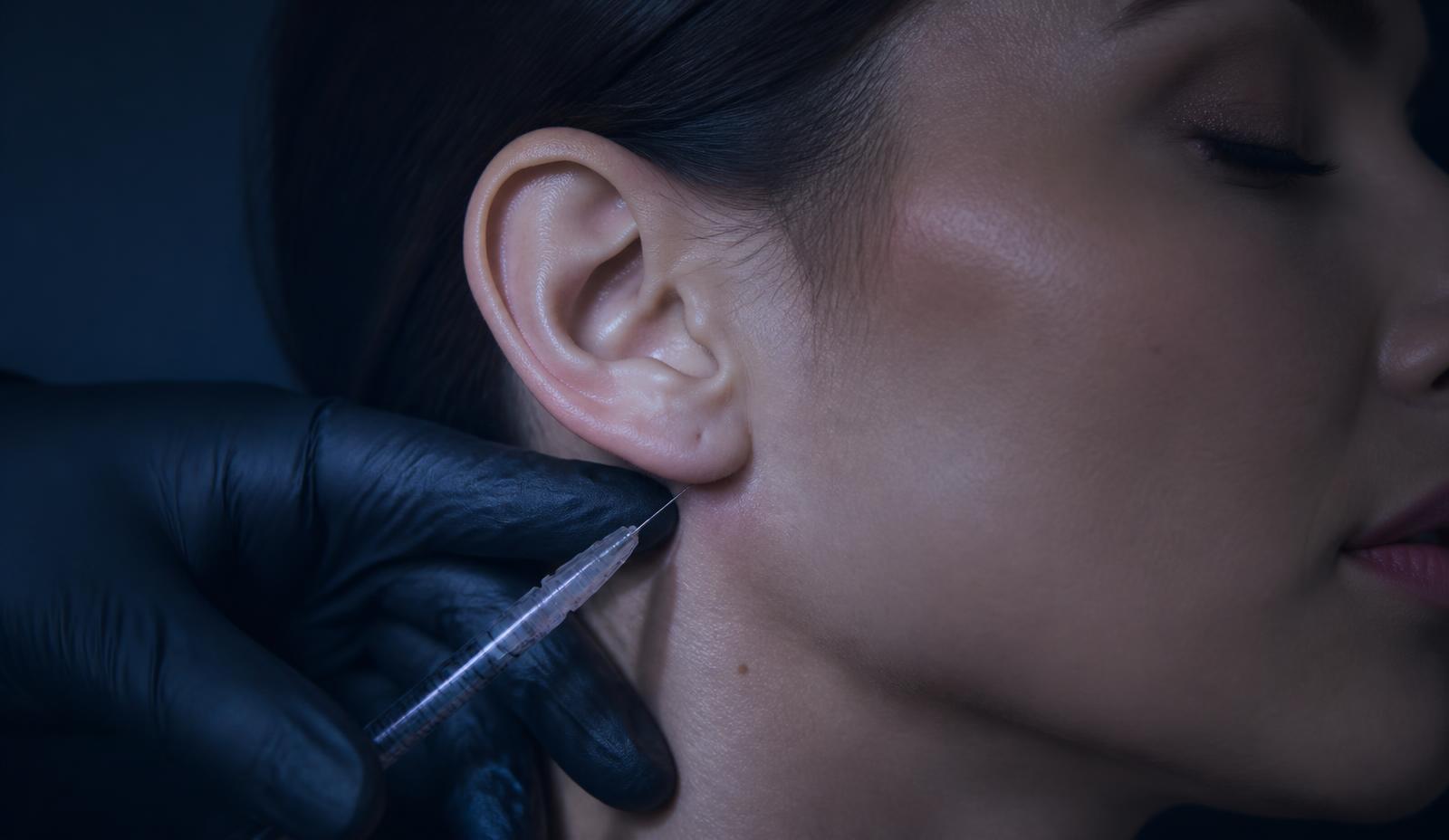
Review Article · Aesthetic Intelligence · Vol 1 · Issue 8
Botulinum Toxin for TinnitusFour Interventions, One Misleading Name
The mechanism is real, the jaw does modulate the noise, and the toxin does work — on the pain. What has never been tested, in twenty years, is the tinnitus itself.
Dr Ahmed Haq1
- 1 Founder and Medical Director, Harley Street Institute, London, United Kingdom
Corresponding author: journal@harleystreetinstitute.com
Journal: Aesthet Intell
DOI: to be assigned
Volume / Issue: 1 / 8
Pages: 201–212
Received: 2026-08-12
Accepted: 2026-08-16
Published: 2026-08-17
Licence: CC BY 4.0
Evidence Review
The patient arrives with a printout. Somewhere on the internet, a clinic has promised that a few units in the jaw will switch off the noise that has been running in her head since 2019. She has tried sound generators, two courses of amitriptyline, a chiropractor, and something involving magnets. She is not gullible. She is exhausted, which is a different thing entirely, and exhaustion buys anything.
Here is the difficulty. She is not entirely wrong. Tinnitus is modulated by the jaw in a substantial minority of sufferers — ask them to clench and the pitch shifts, which is not the behaviour of a purely cochlear symptom. There is a real neuroanatomical story underneath that, and botulinum toxin does real things to the muscles involved. The temptation to join those two facts with a syringe is enormous.
But an intact mechanism is not a treatment. Between the plausible hypothesis and the injected patient sits a gap that in this field has never been properly filled: one small randomised trial in over twenty years, no controlled study of masseter or temporalis injection with tinnitus as an outcome at all, and a literature that keeps mistaking pain relief for auditory benefit. Meanwhile, the one place where toxin genuinely and reproducibly silences a noise — the twitching soft palate — is a rare movement disorder that almost nobody selling tinnitus injections has ever seen.
So this review sorts the field into what it actually is: four different interventions wearing one name, with four completely different amounts of evidence behind them, and one honest consultation script for the woman with the printout.
Abstract
- Background.
- Tinnitus affects an estimated 10–15% of adults, and no pharmacological agent is recommended for its routine treatment by either the American Academy of Otolaryngology–Head and Neck Surgery clinical practice guideline (2014) or NICE guideline NG155 (2020). Botulinum toxin has been proposed for tinnitus on several distinct rationales — chemodenervation of myoclonic middle ear and palatal muscles, reduction of masticatory nociceptive input in somatosensory tinnitus, and modulation of central sensitisation in patients with comorbid chronic migraine. These rationales are frequently conflated in clinical marketing.
- Methods.
- Narrative evidence review. PubMed/MEDLINE, Cochrane Library and Google Scholar were searched to August 2026 combining tinnitus with botulinum toxin, masseter, temporalis, temporomandibular disorder, middle ear myoclonus, palatal tremor, auriculotemporal nerve, greater occipital nerve and chronic migraine. Randomised trials, systematic reviews, case series and guideline documents were appraised by design, replication and outcome specificity. No pooling was performed. Evidence is presented separately for each mechanistic scenario rather than as a single indication.
- Results.
- Four scenarios with markedly different evidence bases were identified. (1) Idiopathic subjective tinnitus: a single small double-blind randomised study (Stidham et al., 2005; n = 30) constitutes essentially the entire controlled literature and has not been replicated in over two decades. (2) Somatosensory tinnitus with temporomandibular disorder: systematic reviews confirm a consistent epidemiological association between temporomandibular disorders and tinnitus, and randomised trials confirm that botulinum toxin reduces masticatory myofascial pain — but no controlled trial was identified in which masseter or temporalis injection was performed with tinnitus as a prespecified outcome. (3) Objective tinnitus: chemodenervation of levator and tensor veli palatini in essential palatal tremor is supported by a dedicated systematic review of case-level data and represents the most consistently effective application; intratympanic injection for middle ear myoclonus is supported only by retrospective series and case reports. (4) Migraine-associated tinnitus: the PREEMPT protocol (155–195 U onabotulinumtoxinA across 31–39 fixed sites) is robustly validated for chronic migraine, but tinnitus was never a trial endpoint, and improvement in comorbid tinnitus rests on a single serendipitous observational report. No botulinum toxin-specific trial of auriculotemporal or greater occipital nerve territory injection for tinnitus was identified; that literature concerns local anaesthetic blocks.
- Conclusion.
- Botulinum toxin is not an evidence-based treatment for subjective tinnitus and should not be offered as one. It has a defensible role in objective tinnitus arising from palatal tremor and, less securely, middle ear myoclonus — both otolaryngological, not aesthetic, indications. In somatosensory tinnitus and in tinnitus comorbid with chronic migraine, toxin may reasonably be directed at the pain or headache disorder itself, with any tinnitus change treated as an unproven secondary effect and consented as such. The field requires a randomised, sham-controlled trial of masticatory injection using validated tinnitus outcome measures before masseter and temporalis treatment can be described as anything other than experimental.
Keywords: tinnitus, botulinum toxin, masseter injection, temporalis, somatosensory tinnitus, temporomandibular disorder, middle ear myoclonus, palatal tremor, chronic migraine, PREEMPT protocol, objective tinnitus, off-label prescribing
Postgraduate Level
Complete this article to earn your certificate
Read the article, complete a short assessment, and submit your reflection to receive your AiCE Points certificate. Equivalence to 1 CPD/CME point — we do not award CPD/CME directly.
Learning Objectives
- 1Separate the four distinct clinical scenarios in which botulinum toxin is proposed for tinnitus
- 2Explain trigeminal–cochlear convergence and the basis of somatosensory tinnitus modulation
- 3Appraise the controlled evidence for botulinum toxin in subjective tinnitus and its limits
- 4Recognise objective tinnitus from palatal tremor and middle ear myoclonus and refer appropriately
- 5Apply the PREEMPT protocol context when tinnitus is comorbid with chronic migraine
- 6Consent an off-label masticatory injection accurately, including the absence of tinnitus efficacy data
Botulinum Toxin and Tinnitus — Quick Reference
Evidence at a Glance
- Subjective tinnitus
- 1 RCT (n = 30, 2005), unreplicated
- Masseter / temporalis
- No controlled trial with a tinnitus endpoint
- Palatal tremor
- Systematic review of case-level data — best supported
- Middle ear myoclonus
- Retrospective series and case reports
- Migraine comorbidity
- PREEMPT validated for migraine only
- Licence status
- Off-label for tinnitus in all territories
PREEMPT Protocol (Chronic Migraine)
- Dose
- 155–195 U onabotulinumtoxinA
- Sites
- 31–39 fixed sites, 7 muscle groups
- Interval
- Every 12 weeks
- Tinnitus endpoint
- Never measured in PREEMPT 1 or 2
Refer, Do Not Inject
- Unilateral or pulsatile
- ENT / audiovestibular, consider imaging
- Clicking or rhythmic
- ENT — palatal tremor or middle ear myoclonus
- Asymmetric hearing loss
- Urgent ENT assessment
- Chronic migraine
- Neurology for PREEMPT assessment
If Treating Masticatory Pain
- First line
- Splint, physiotherapy, parafunction and sleep control
- Indication
- Myofascial pain — not tinnitus
- Outcome tracking
- Pain score and validated tinnitus index, separately
- Consent
- Off-label, no efficacy data for tinnitus, atrophy risk
1. Introduction: One Name, Four Interventions
Tinnitus — the perception of sound without an external acoustic source — affects roughly one in seven adults, and around one in twenty to a degree that materially damages sleep, concentration or mood. It is a symptom, not a disease, and the range of pathologies that produce it runs from cerumen impaction to vestibular schwannoma to nothing demonstrable at all. That heterogeneity is the reason no drug has ever succeeded across the condition as a whole.
Both major guidelines are explicit about this. The American Academy of Otolaryngology–Head and Neck Surgery clinical practice guideline on tinnitus advises against routinely recommending pharmacological agents for persistent bothersome tinnitus, on the grounds that no drug has demonstrated reproducible benefit specific to the symptom. NICE guideline NG155 reaches a comparable position for the UK, recommending assessment, audiological management, sound therapy and psychological approaches, and declining to endorse drug treatment for tinnitus itself. Botulinum toxin is not named as a recommended therapy in either document.
Despite that, botulinum toxin for tinnitus is now marketed with some enthusiasm, particularly in aesthetic settings where masseter injection is already routine and the equipment, the skill and the patient population are all conveniently already present. The commercial logic is obvious. The clinical logic is not — and the reason is that 'botulinum toxin for tinnitus' is not one intervention. It is at least four, targeting four different mechanisms, in four different anatomical territories, with four wildly different quantities of evidence behind them.
This review separates them deliberately. A practitioner who can articulate which of the four scenarios a given patient falls into has already done most of the clinical reasoning that this field usually skips.
1
Randomised trial in subjective tinnitus
Stidham 2005, n = 30, not replicated in over 20 years
0
Controlled trials of masseter/temporalis BoNT
With tinnitus as a prespecified outcome
≈ 1 in 3
Tinnitus prevalence in TMD cohorts
Association is robust; causal direction is not
155–195 U
PREEMPT dose for chronic migraine
31–39 fixed sites; tinnitus was never an endpoint
Handbook edition
Botulinum Toxin for Tinnitus — print-ready PDF
A designed A4 handbook of this review: the four clinical scenarios, both anatomical figures, the evidence-strength chart, the consultation framework and a printable triage card. Every chapter carries a QR code back to this page and to the HSI AI assistant with that chapter's question already loaded.
2. Why the Jaw Can Change a Sound in the Head
The mechanism that makes masticatory injection plausible is real, well characterised and worth stating precisely, because it is routinely misdescribed in patient-facing material as toxin 'relaxing the ear'.
Somatosensory tinnitus refers to tinnitus whose loudness, pitch or laterality can be modulated by voluntary movement or manual pressure — jaw clenching, protrusion, neck rotation, pressure over the masseter or the sternocleidomastoid. It is not a fringe subgroup: modulation of this kind is demonstrable in a substantial proportion of tinnitus sufferers when systematically tested, and it is the clinical fingerprint that distinguishes a somatic contribution from a purely cochlear one.
The anatomical substrate is convergence. Somatosensory afferents from the trigeminal and upper cervical territories — including proprioceptive and nociceptive input from the masticatory muscles and the temporomandibular joint — project to the dorsal cochlear nucleus and to other brainstem auditory relay structures. In animal models this somatosensory input can alter spontaneous firing rates in auditory neurons, and sustained nociceptive drive is associated with increased spontaneous activity and altered gain in central auditory pathways. In plain terms: a chronically overworked, painful jaw is capable of turning up the volume on a brain that is already generating noise.
There is also the middle ear connection. Tensor tympani is innervated by the mandibular division of the trigeminal nerve — the same nerve supplying the masticatory muscles — and abnormal tonic tensor tympani activity has been proposed as a contributor to aural fullness, ear pain and certain tinnitus presentations in patients with masticatory dysfunction. This is a plausible but incompletely proven pathway.
Layered onto all of this is the epidemiological evidence. Systematic reviews, including the review by Bousema and colleagues in Trends in Hearing, confirm a consistent association between temporomandibular disorders and subjective tinnitus, and separate meta-analyses report substantially higher tinnitus prevalence in temporomandibular disorder populations than in controls. What none of these establish is direction of causation. Chronic pain, poor sleep, anxiety and hypervigilance are all shared upstream of both conditions, and hypervigilance in particular is the single strongest predictor of tinnitus distress.
So the mechanism licenses a hypothesis: reduce masticatory nociceptive drive and central auditory gain may fall with it. It does not, on its own, license a treatment.
3. The Controlled Evidence in Subjective Tinnitus Is One Small Trial
The entire randomised evidence base for botulinum toxin in subjective tinnitus consists, as far as this search could establish, of a single study. Stidham and colleagues published a double-blind, prospective evaluation of botulinum toxin type A in tinnitus in Otolaryngology–Head and Neck Surgery in 2005, randomising thirty patients between treatment arms. It is a small, single-centre study, and in the two decades since, no adequately powered confirmatory randomised trial of botulinum toxin for subjective tinnitus has appeared.
That absence is itself informative. Twenty years is long enough for an effective, cheap, widely available, already-licensed molecule to have been tested repeatedly in a symptom that affects hundreds of millions of people and has no satisfactory treatment. Interventions that work tend to attract replication. Interventions supported by a single small trial that nobody has revisited are usually either ineffective, effective only in an unidentified subgroup, or effective only in the hands of the original investigators.
The honest position, therefore, is that for a patient with idiopathic, non-modulable, non-pulsatile subjective tinnitus, there is no evidence base for botulinum toxin at all. Offering it as a tinnitus treatment in that setting is not a marginal call. It is treatment without evidence, at cost, in a patient population that is disproportionately desperate — which is exactly the population for whom regulators reserve their attention.
Four clinical scenarios, four completely different evidence bases
The single most common error in this field is to speak about 'botulinum toxin for tinnitus' as one intervention. It is four interventions, targeting four mechanisms, with evidence ranging from reasonable to absent.
| Scenario | Presumed mechanism | Target | Best available evidence | Evidence grade |
|---|---|---|---|---|
| Objective tinnitus — palatal tremor | Rhythmic contraction of levator/tensor veli palatini producing audible clicking | Levator veli palatini ± tensor veli palatini, EMG- or endoscopy-guided | Systematic review of case series and case reports | Low, but consistently positive |
| Objective tinnitus — middle ear myoclonus | Tensor tympani or stapedius myoclonus transmitted through the ossicular chain | Intratympanic / transtympanic injection to tensor tympani | Retrospective case series and case reports | Very low |
| Somatosensory tinnitus with temporomandibular dysfunction | Trigeminal–cochlear nucleus convergence; masticatory nociception modulating central auditory gain | Masseter, temporalis, ± lateral pterygoid | Association studies plus TMD pain RCTs with no tinnitus endpoint | Indirect / absent for the tinnitus outcome |
| Tinnitus comorbid with chronic migraine | Shared central sensitisation and trigeminovascular modulation | PREEMPT protocol sites | Serendipitous observational report; no controlled data | Anecdotal |
Grades are the authors' appraisal of study design and replication, not a formal GRADE assessment.
4. Masseter and Temporalis: A Real Treatment for the Wrong Endpoint
Here the literature is genuinely instructive, but only if read carefully.
Botulinum toxin for masticatory myofascial pain has a legitimate randomised evidence base. Controlled trials — including work by De la Torre Canales and colleagues in Toxins and subsequent double-blind trials in refractory masticatory myofascial pain — demonstrate improvements in pain intensity, muscle sensibility and mandibular function following masseter and temporalis injection, although the field is not unanimous and there is ongoing and appropriate concern about masticatory muscle atrophy and bone density with repeated high-dose treatment. Further randomised trials are in progress.
What does not exist is a controlled trial in which masseter or temporalis botulinum toxin was administered and tinnitus was a prespecified outcome measured with a validated instrument such as the Tinnitus Handicap Inventory, the Tinnitus Functional Index or the Tinnitus Questionnaire. This is the central finding of this review and it deserves to be stated bluntly: the treatment most commonly marketed for tinnitus in aesthetic practice has never been tested for tinnitus in a controlled setting.
The reported improvements are therefore uninterpretable. If a patient with temporomandibular pain and tinnitus receives masseter toxin, sleeps better because her jaw stops aching, stops clenching through the night, becomes less hypervigilant, and reports at week four that the ringing bothers her less — how much of that is auditory and how much is analgesic, placebo and regression to the mean? Tinnitus distress is famously responsive to non-specific attention, and injection is among the most powerfully placebogenic interventions in medicine.
None of this means masticatory injection is useless in these patients. It means the correct indication is the pain, and any tinnitus change is a secondary observation. A patient treated for myofascial temporomandibular pain, with tinnitus documented as a comorbidity and any change tracked but not promised, is being treated defensibly. The same injection, sold as a tinnitus cure, is not.
Sequence matters too. Conservative temporomandibular management — occlusal splint therapy where indicated, jaw physiotherapy, parafunction control, sleep and stress management, and treatment of any underlying dental or occlusal pathology — has a stronger evidence base for temporomandibular pain than toxin does and carries no atrophy risk. Botulinum toxin belongs after that, not instead of it.
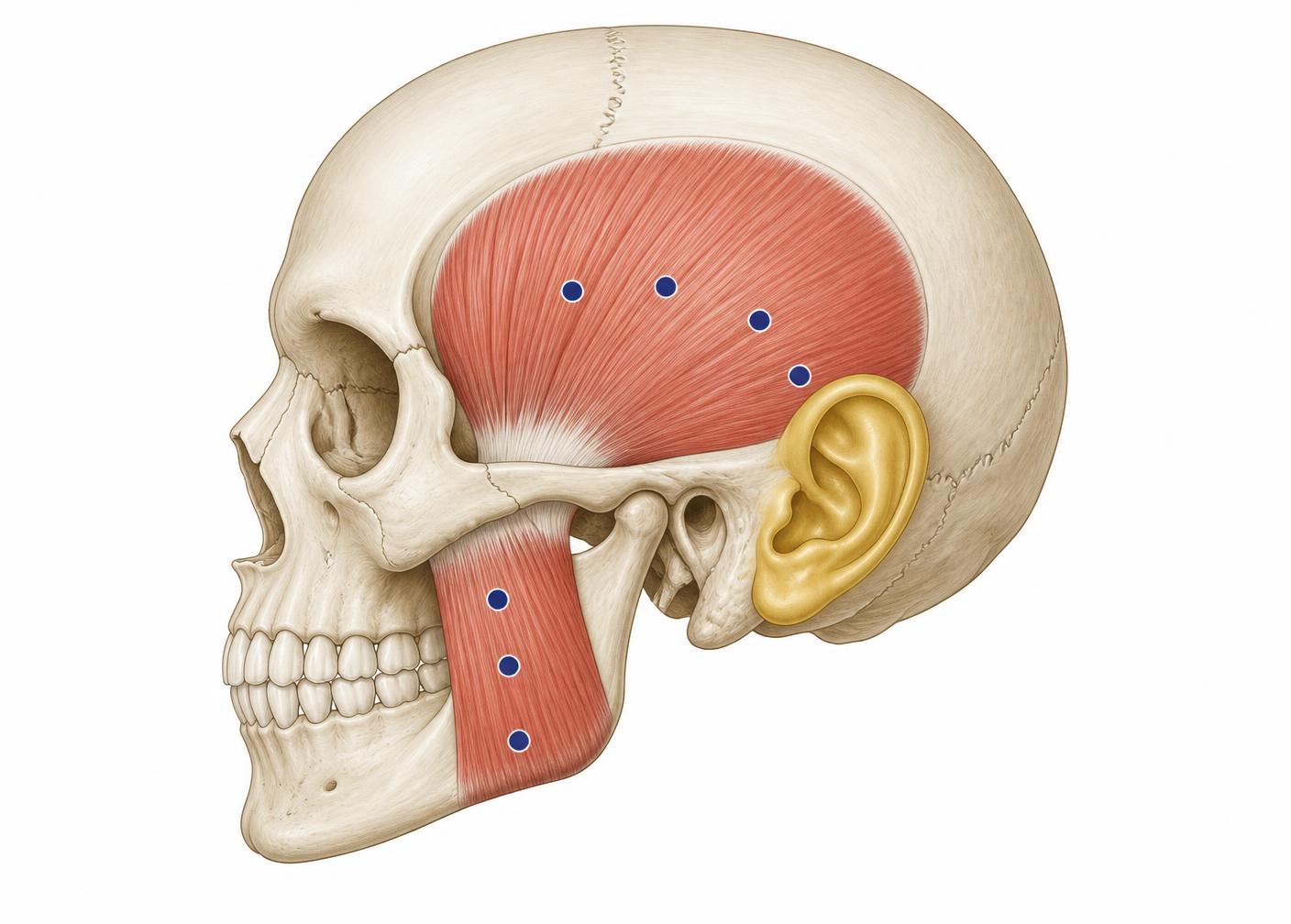
Source: HSI editorial illustration. Injection points are schematic and do not replace anatomical training or ultrasound assessment.
5. Objective Tinnitus: Where Chemodenervation Actually Works
The paradox of this field is that botulinum toxin does have a convincing role in tinnitus — just not in the tinnitus most patients have.
Objective tinnitus is the small subset in which a sound genuinely exists and can sometimes be heard by the examiner. Two muscular causes dominate. In essential palatal tremor, rhythmic contraction of the levator veli palatini produces repetitive clicking transmitted through the eustachian tube; the classic report by Thomas and colleagues in Neurology localised the ear click to levator activity. In middle ear myoclonus, contraction of tensor tympani or stapedius produces clicking, fluttering or a low-frequency thumping via the ossicular chain.
For palatal tremor, chemodenervation of levator veli palatini, with or without tensor veli palatini, is the best-supported use of botulinum toxin anywhere in the tinnitus literature. A dedicated systematic review of botulinum toxin treatment of objective tinnitus due to essential palatal tremor found consistent symptomatic benefit across the reported case-level literature. Doses are small, injection is guided by electromyography or endoscopic visualisation, and the characteristic adverse effects are velopharyngeal insufficiency, hypernasal speech, nasal regurgitation of fluids and transient dysphagia — which is precisely why this is an otolaryngology or movement-disorder procedure and not an aesthetic one.
For middle ear myoclonus, the evidence is weaker: retrospective case series, including a large series by Park and colleagues in Laryngoscope describing clinical characteristics and therapeutic response, and more recent retrospective work on intratympanic botulinum toxin injection assessed with audiological and questionnaire outcomes. There are also individual case reports of transtympanic and transpalatal injection resolving clicking tinnitus. No randomised data exist, and surgical tenotomy of tensor tympani and stapedius remains an alternative in refractory cases.
The clinical instruction that follows is simple and is the single most useful thing an aesthetic practitioner can take from this review: if the tinnitus clicks, flutters, or is rhythmic — particularly if it is audible to anyone else — that patient should be referred to otolaryngology, not injected in the jaw. That presentation has an identifiable generator and a treatment with a real success record, and it is not the treatment being offered on the high street.
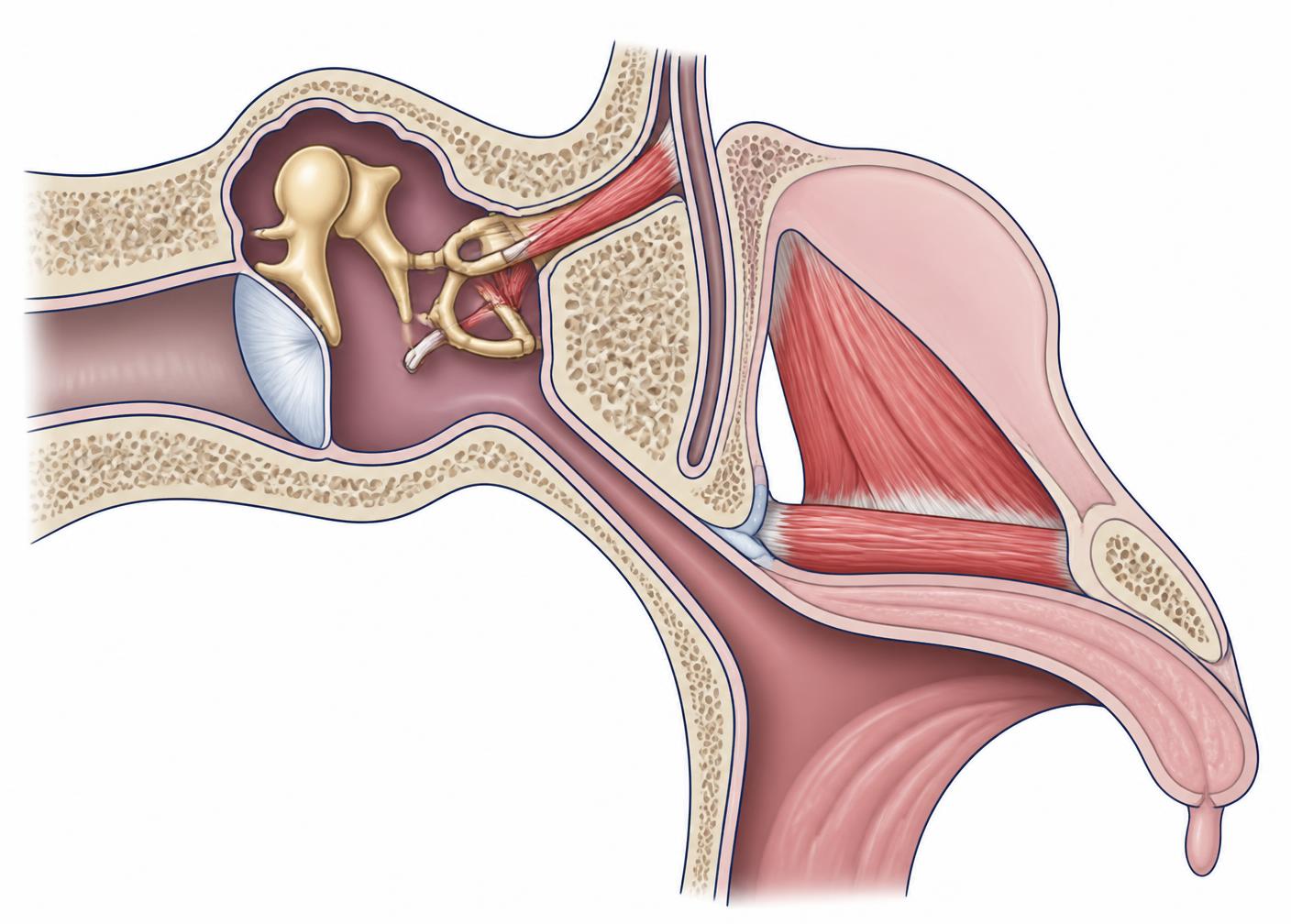
Source: HSI editorial illustration. Palatal and intratympanic injection is otolaryngology practice and is outside the scope of aesthetic training.
6. Peri-Auricular, Auriculotemporal and Occipital Territory
Injections 'around the ear' occupy a confused space in this literature and are frequently cited in support of botulinum toxin when the underlying studies used something else entirely.
There is a small and old literature on nerve blockade in tinnitus — Matsushima and colleagues reported effects of greater occipital nerve block on tinnitus and dizziness in the International Tinnitus Journal, and more recent case series describe ultrasound-guided occipital nerve blocks reducing tinnitus-associated otalgia, alongside integrative protocols combining repeated facial and auriculotemporal nerve blocks with auditory and non-auditory stimulation. These are predominantly local anaesthetic and corticosteroid studies, uncontrolled, and small.
No botulinum toxin-specific controlled trial of auriculotemporal or greater occipital nerve territory injection for tinnitus was identified. Any such practice is extrapolation — from headache medicine, where occipital nerve blockade and peri-cranial toxin injection have a considerably better evidence base for pain, to an auditory symptom that those studies did not measure.
There is a further anatomical reason for caution in this territory. The peri-auricular and preauricular region contains the facial nerve trunk and its upper divisions, the parotid gland, and the superficial temporal vessels. Diffusion of toxin into unintended targets here produces asymmetry, brow ptosis, salivary dysfunction and, in the parotid region, a poor cosmetic and functional outcome that will substantially outlast the tinnitus consultation. Injecting an unproven indication in a high-consequence anatomical zone is a poor risk trade at any dose.
7. Combination With Migraine Treatment: The Most Defensible Overlap
The clearest legitimate route to treating a patient with both tinnitus and botulinum toxin is to treat the migraine.
OnabotulinumtoxinA is a licensed prophylactic treatment for chronic migraine, defined as fifteen or more headache days per month with at least eight migrainous. The PREEMPT programme — Dodick and colleagues' pooled analysis of the double-blind placebo-controlled phases, together with the PREEMPT 2 trial and the injection paradigm described by Blumenfeld and colleagues — established a fixed-site, fixed-dose protocol of 155 to 195 units across 31 to 39 sites in seven head and neck muscle groups: corrugator, procerus, frontalis, temporalis, occipitalis, cervical paraspinal and trapezius, repeated at twelve-week intervals. In the UK, NICE technology appraisal guidance supports its use in chronic migraine that has failed at least three prior preventives.
The relevance to tinnitus is comorbidity. Migraine and tinnitus co-occur far more often than chance, and the association extends to vestibular migraine, aural fullness and phonophobia; shared central sensitisation and trigeminovascular mechanisms are the usual explanation. Patients whose tinnitus fluctuates with their headache cycle, worsens premenstrually, or is accompanied by photophobia, phonophobia and motion sensitivity are describing a migrainous phenotype, not a cochlear one.
Two of the PREEMPT muscle groups — temporalis and cervical paraspinals — overlap directly with the somatosensory territories implicated in tinnitus modulation, which is presumably why observations of tinnitus improvement during migraine treatment have accumulated. But the honest summary of that evidence is a single paper in the International Tinnitus Journal describing serendipitous observations that botulinum toxin can abolish or quieten tinnitus associated with chronic migraine. Tinnitus was not an endpoint in PREEMPT 1 or 2 and has not been an endpoint in any subsequent controlled migraine trial identified here.
The practical conclusion is nonetheless useful. In a patient with chronic migraine and tinnitus, referral for PREEMPT assessment is appropriate on migraine grounds alone, the intervention is licensed and evidence-based for that indication, and any tinnitus improvement is a welcome but unpromised bonus. That is a clinically and ethically clean position, and it is the only one in this review in which a patient with tinnitus can receive botulinum toxin on the strength of high-quality randomised evidence — for something else.
Source: HSI editorial appraisal of the cited literature. Values are ordinal and interpretive, not derived from pooled statistics.
8. Safety, Regulation and the Cost of Hope
Botulinum toxin has no marketing authorisation for tinnitus in the United Kingdom or elsewhere. Every use described in this review is off-label, and in the case of masticatory injection for tinnitus, off-label without supporting controlled evidence. That combination places a heavy burden on consent, documentation and honesty in marketing, and it engages General Medical Council guidance on prescribing unlicensed and off-label treatments as well as Advertising Standards Authority rules on efficacy claims.
The specific harms differ by territory. Masseter and temporalis injection carries paradoxical bulging, chewing fatigue, asymmetric smile from diffusion into risorius or zygomaticus, temporal hollowing with repeated temporalis treatment, and — with sustained high-dose regimens — masticatory muscle atrophy and concerns regarding mandibular bone density. Palatal injection risks velopharyngeal insufficiency and dysphagia. Intratympanic injection carries the risks of the middle ear route itself. Peri-auricular injection risks facial nerve and parotid involvement.
Against these sit the non-physical harms, which in a tinnitus population are not trivial. Cost, repeated three or four times a year indefinitely. The reinforcement of somatic hypervigilance in a condition where hypervigilance is the principal driver of distress. The delay of effective management — cognitive behavioural therapy for tinnitus, tinnitus retraining, sound enrichment and hearing aid fitting where there is coexisting hearing loss all have better evidence than any injectable and are what NICE actually recommends. And the specific harm of a failed miracle: a patient who has been promised silence and is handed a bill and the same noise is measurably worse off than one who was told the truth at the outset.
9. What a Defensible Practice Looks Like
None of this argues for reflexive refusal. It argues for triage, and the triage is not difficult.
Every patient presenting with tinnitus needs red flags excluded first: unilateral tinnitus, pulsatile tinnitus, associated asymmetric hearing loss, vertigo, otorrhoea or neurological signs all demand audiological and otolaryngological assessment, and in some cases imaging, before any discussion of injectables. An aesthetic practitioner who injects a patient with undiagnosed unilateral pulsatile tinnitus has not committed a technique error; they have missed a diagnosis.
Beyond that, three questions sort the remainder. Does the tinnitus change with clenching, jaw movement or neck position? If yes, there is a somatic component, and conservative temporomandibular management is the first intervention, with botulinum toxin considered only as an adjunct for demonstrated myofascial pain. Does the patient meet criteria for chronic migraine? If yes, the referral is to neurology and the target is the migraine. Is the sound clicking, rhythmic or audible to an examiner? If yes, the referral is to otolaryngology for assessment of palatal tremor or middle ear myoclonus, where the toxin evidence genuinely lives.
If none of these apply — non-modulable, non-pulsatile, non-rhythmic, non-migrainous subjective tinnitus — there is no defensible injectable option, and saying so plainly is the correct clinical act.
What the field needs is not more anecdote. It needs one adequately powered, sham-controlled randomised trial of masseter and temporalis injection in patients with confirmed somatic modulation, using the Tinnitus Functional Index as a primary outcome at twelve weeks, with masticatory pain measured separately so that the analgesic and auditory effects can finally be told apart. Until that trial exists, masticatory botulinum toxin for tinnitus is an experiment being conducted on paying patients without a control group.
Consultation framework for the patient requesting toxin for tinnitus
A structured triage that separates the small group with a plausible mechanism from the large group who will be harmed only by cost and false hope.
| Step | Question | Action if positive |
|---|---|---|
| 1. Exclude red flags | Unilateral, pulsatile, associated hearing loss, vertigo, otorrhoea or neurological signs? | Do not inject. Urgent ENT or audiovestibular referral; imaging as directed. |
| 2. Establish audiological baseline | Has the patient had audiometry and a formal tinnitus assessment? | Refer for assessment before any injectable is discussed. |
| 3. Test somatic modulation | Does clenching, jaw protrusion, neck rotation or firm masseter pressure change loudness or pitch? | Somatosensory component present — conservative TMD care first, toxin only as a later adjunct. |
| 4. Screen for headache disorder | Does the patient meet ICHD-3 criteria for chronic migraine (≥15 headache days/month)? | Refer to neurology for PREEMPT assessment; treat the migraine, not the tinnitus. |
| 5. Listen for a rhythmic or clicking sound | Is the tinnitus clicking, rhythmic, or audible to the examiner with a stethoscope? | Suspect palatal tremor or middle ear myoclonus — ENT referral, not aesthetic injection. |
| 6. Consent honestly | Has the patient been told there is no controlled evidence for tinnitus benefit? | Document off-label status, absent efficacy data, cost, and that any benefit may be from pain relief alone. |
Tinnitus is not an indication for botulinum toxin in any UK marketing authorisation. Any use is off-label and requires explicit, documented consent.
AI Disclosure
AI-assisted literature retrieval and drafting support were used in preparing this review. Citations were checked against PubMed records by the named author. Where full-text numerical detail could not be verified at the time of writing, claims are stated qualitatively rather than numerically, and readers are advised to consult the primary sources before applying any dose or protocol clinically. The author accepts full responsibility for the content.
Competing Interests
The author(s) declare no competing financial or non-financial interests relevant to this work.
Funding
This work received no specific grant from any funding agency in the public, commercial, or not-for-profit sectors.
Ethics & Consent
Where applicable, ethical approval and informed patient consent were obtained in accordance with the Declaration of Helsinki. Reviews and commentaries did not require ethical approval.
HSI Editorial · Reflection & Forward Recommendations
Where we stand on this
Reflection
The mechanism is real, the epidemiological association is real, and the treatment for the pain is real — but none of that adds up to a treatment for the noise, and conflating them is how a plausible hypothesis becomes a mis-sold service.
The strongest evidence in this entire field concerns a rare movement disorder of the soft palate that virtually no aesthetic practitioner will ever encounter. The weakest concerns the injection that is most frequently advertised.
Tinnitus patients are among the most therapeutically exhausted in medicine. That vulnerability raises, rather than lowers, the standard of proof required before taking their money.
Forward Recommendations
- Never accept tinnitus as a presenting complaint without excluding unilateral, pulsatile and asymmetric-hearing-loss presentations and referring for audiological assessment.
- Test somatic modulation formally — clench, protrude, rotate the neck, apply masseter pressure — and record whether loudness or pitch changes.
- Where a somatic component exists, treat masticatory myofascial pain by the conventional stepped pathway and position botulinum toxin as an adjunct for pain, never as a tinnitus therapy.
- Refer clicking, fluttering or examiner-audible tinnitus to otolaryngology; palatal and intratympanic injection is not aesthetic practice.
- Refer patients meeting chronic migraine criteria for PREEMPT assessment and treat the headache disorder on its own licensed evidence.
- Document off-label status, the absence of controlled efficacy data for tinnitus, atrophy and diffusion risks, and cost, and remove any tinnitus efficacy claim from clinic marketing.
- Track outcomes with a validated instrument such as the Tinnitus Functional Index alongside a separate pain score, so that analgesic and auditory effects can be distinguished.
Editorial position of the Harley Street Institute. Authored by the HSI Clinical Review Board; not a substitute for the peer-reviewed evidence summarised above.
References
- Stidham KR, Solomon PH, Roberson JB Jr. Evaluation of botulinum toxin A in treatment of tinnitus. Otolaryngol Head Neck Surg. 2005;132(6):883–889. PMID: 15944559.
- Tunkel DE, Bauer CA, Sun GH, et al. Clinical practice guideline: tinnitus. Otolaryngol Head Neck Surg. 2014;151(2 Suppl):S1–S40. PMID: 25273878.
- National Institute for Health and Care Excellence. Tinnitus: assessment and management. NICE guideline NG155. London: NICE; 13 March 2020.
- Bousema EJ, Koops EA, van Dijk P, Dijkstra PU. Association between subjective tinnitus and cervical spine or temporomandibular disorders: a systematic review. Trends Hear. 2018;22:2331216518800640.
- Mottaghi A, Menéndez-Díaz I, Cobo JL, González-Serrano J, Cobo T. Is there a higher prevalence of tinnitus in patients with temporomandibular disorders? A systematic review and meta-analysis. J Oral Rehabil. 2019;46(1):76–86.
- Skog C, Fjellner J, Ekberg E, Häggman-Henrikson B. Tinnitus as a comorbidity to temporomandibular disorders: a systematic review. J Oral Rehabil. 2019;46(1):87–99. PMID: 30991812.
- De la Torre Canales G, Poluha RL, Pinzón NA, et al. Efficacy of botulinum toxin type-A I in the improvement of mandibular motion and muscle sensibility in myofascial pain TMD subjects: a randomized controlled trial. Toxins (Basel). 2022;14(7):441.
- Botulinum toxin-A effects on pain, somatosensory and psychosocial features of patients with refractory masticatory myofascial pain: a randomized double-blind clinical trial. Sci Rep. 2024;14:4201. doi:10.1038/s41598-024-54906-z.
- Effect of botulinum toxin on masticatory muscle pain in patients with temporomandibular disorders: a randomized, double-blind, placebo-controlled pilot study. Toxins (Basel). 2023;15(10):597.
- Park SN, Bae SC, Lee GH, et al. Clinical characteristics and therapeutic response of objective tinnitus due to middle ear myoclonus: a large case series. Laryngoscope. 2013;123(10):2516–2520.
- Efficacy and safety of intratympanic botulinum toxin injection on middle ear myoclonic tinnitus. PMID: 40709609.
- Botulinum toxin treatment of objective tinnitus because of essential palatal tremor: a systematic review. PMID: 27273401.
- Thomas AM, O'Reilly B, Mann C, Jamieson DRS. Ear clicks in palatal tremor caused by activity of the levator veli palatini. Neurology. 1996;46(4):1168–1169.
- Deuschl G, Löhle E, Heinen F, Lücking CH. Ear clicks in palatal tremor and the effect of botulinum toxin. PMID: 16845571.
- Treatment of objective tinnitus with transpalatal botulinum toxin injection in a paediatric patient with middle ear myoclonus: a case report. Int J Pediatr Otorhinolaryngol. 2018.
- Dodick DW, Turkel CC, DeGryse RE, et al. OnabotulinumtoxinA for treatment of chronic migraine: pooled results from the double-blind, randomized, placebo-controlled phases of the PREEMPT clinical program. Headache. 2010;50(6):921–936.
- Diener HC, Dodick DW, Aurora SK, et al. OnabotulinumtoxinA for treatment of chronic migraine: results from the double-blind, randomized, placebo-controlled phase of the PREEMPT 2 trial. Cephalalgia. 2010;30(7):804–814.
- Blumenfeld A, Silberstein SD, Dodick DW, Aurora SK, Turkel CC, Binder WJ. Method of injection of onabotulinumtoxinA for chronic migraine: a safe, well-tolerated, and effective treatment paradigm based on the PREEMPT clinical program. Headache. 2010;50(9):1406–1418.
- Botulinum toxin can abolish and/or quiet tinnitus associated with chronic migraine: serendipitous observations. Int Tinnitus J. 2021. PMID: 35239295.
- Management of migraine-associated vestibulocochlear disorders. Audiol Res. 2023;13(4):47.
- Matsushima JI, Sakai N, Demi N, Ifukube T. Effects of greater occipital nerve block on tinnitus and dizziness. Int Tinnitus J. 1999;5(1):40–46.
- Ultrasound-guided occipital nerve blocks to reduce tinnitus-associated otalgia: a case series. PMID: 34989354.
- Integrative treatment for tinnitus combining repeated facial and auriculotemporal nerve blocks with stimulation of auditory and non-auditory nerves. PMID: 35299621.
Declarations
- Peer review:
- This article underwent single-blind external peer review by at least two independent reviewers, followed by editorial acceptance.
- Conflicts of interest:
- The author(s) declare no competing financial or commercial interests relating to the content of this article. Editorial decisions are made independently of the Harley Street Institute's commercial training activities.
- Funding:
- No external funding was received for the preparation of this article.
- Licence:
- © 2026 Harley Street Institute. Open access article distributed under the Creative Commons Attribution 4.0 International Licence (CC BY 4.0), permitting unrestricted use with appropriate citation.
Post-publication review
Discuss this article with the journal AI
Ask a clinical question about this article, or flag a possible error. Our AI agent will reply in real time, log your input, and — if you have identified a credible mistake — escalate it to the HSI editorial team for review and a published correction notice.
AI responses are generated by an assistant model. They do not constitute medical advice. Editorial corrections are only applied after a named HSI editor reviews and signs off.
Hi. I'm the Aesthetic Intelligence reader AI for this article.
Try: "Explain section 3 in plain English." · "What's the evidence for the 1-in-6,410 figure?" · "How does this compare to UK NICE guidance?"