
Clinical Example
Pigmentation case study
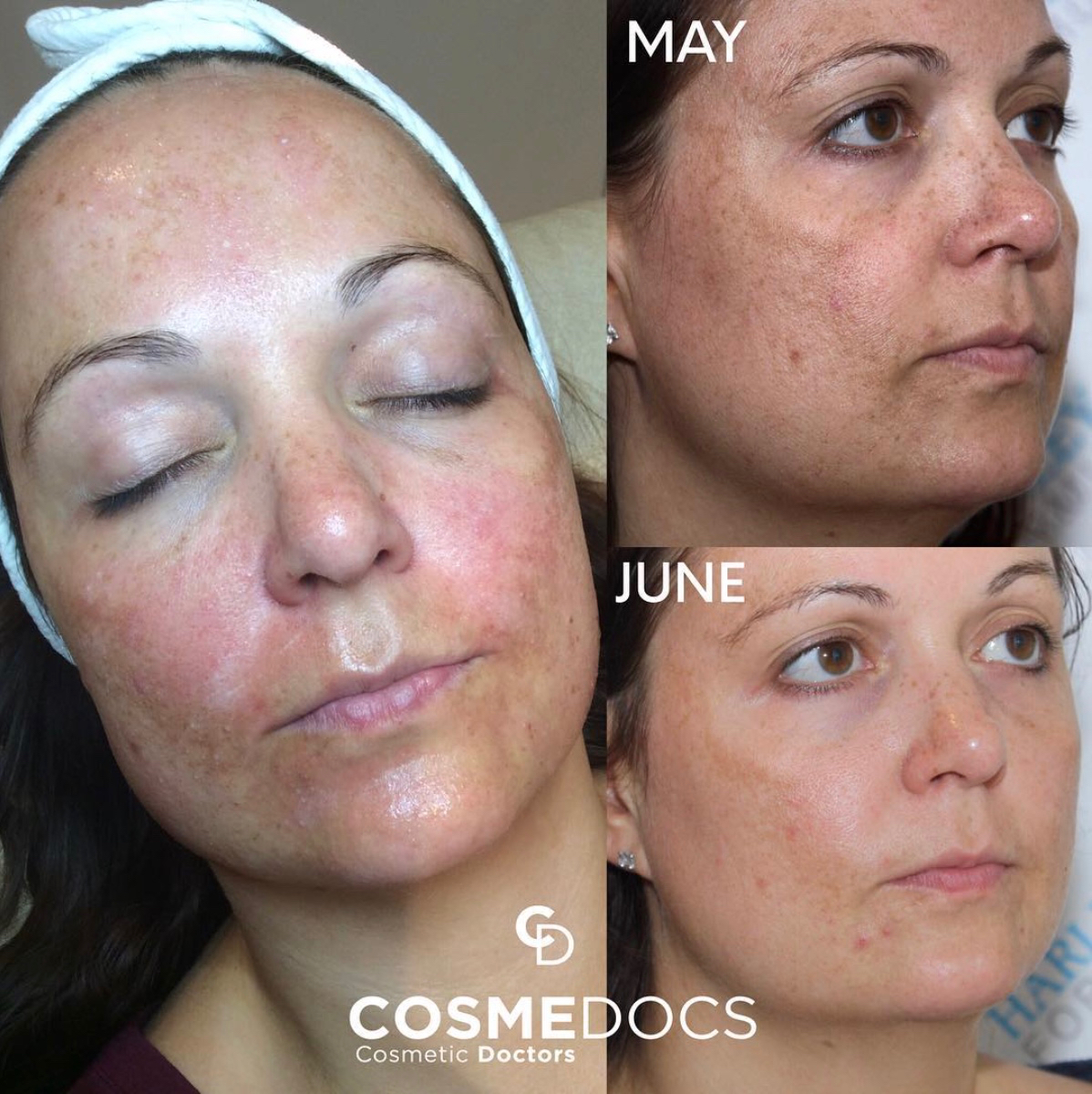
Consider a patient presenting with facial pigmentation who requests a chemical peel. At first glance, this may appear straightforward. However, a deeper assessment reveals a darker skin type and a history of acne.
This immediately raises the risk of post-inflammatory hyperpigmentation. If the pigmentation is melasma, aggressive treatment may worsen the condition rather than improve it.
In this scenario, proceeding without careful consideration could lead to a poor outcome. A more appropriate approach may involve stabilising the skin, improving barrier function, and using conservative treatments.
This example highlights the importance of combining clinical assessment with risk awareness before making treatment decisions.
Clinical Takeaway
Always assess Fitzpatrick skin type and history of PIH before recommending any pigmentation treatment.
Key Points
- Surface presentation can be misleading
- Darker skin types carry higher PIH risk
- Conservative approach often yields better outcomes
Clinical Tip
Always assess Fitzpatrick skin type and history of PIH before recommending any pigmentation treatment.
Continue Your Clinical Dermatology Training
This page is part of the CAD – Certificate in Aesthetic Dermatology by Harley Street Institute. Unlock the full structured programme to build clinical confidence in dermatological assessment.