
Harley Street Institute
STOP GUESSING.
Aesthetic medicine is not a collection of injection points.
You can learn where to put a needle from a diagram.
The harder part is knowing what you are looking at, why you are treating it, which layer matters, how much is enough — and when to leave the face alone.
That is the difference between learning procedures and learning aesthetic medicine.

From “where the hell do I inject?” to “I know exactly why I’m here.”
The journey every competent injector travels — we just make it shorter.

DAY 1
Uncertainty
- Which point?
- How deep?
- How much?
- What product?
- What if I get it wrong?
TECHNICAL COMPETENCE
I can perform the procedure.
- Anatomy
- Needle control
- Cannula control
- Depth
- Product handling
- Safety
CLINICAL JUDGEMENT
I understand the face.
- Skin
- Movement
- Volume loss
- Sagging
- Proportion
- Patient selection
RESTRAINT
I know when not to treat.
The final stage of expertise is not doing more. It is knowing what deserves treatment — and what does not.
STOP GUESSING. START SEEING.
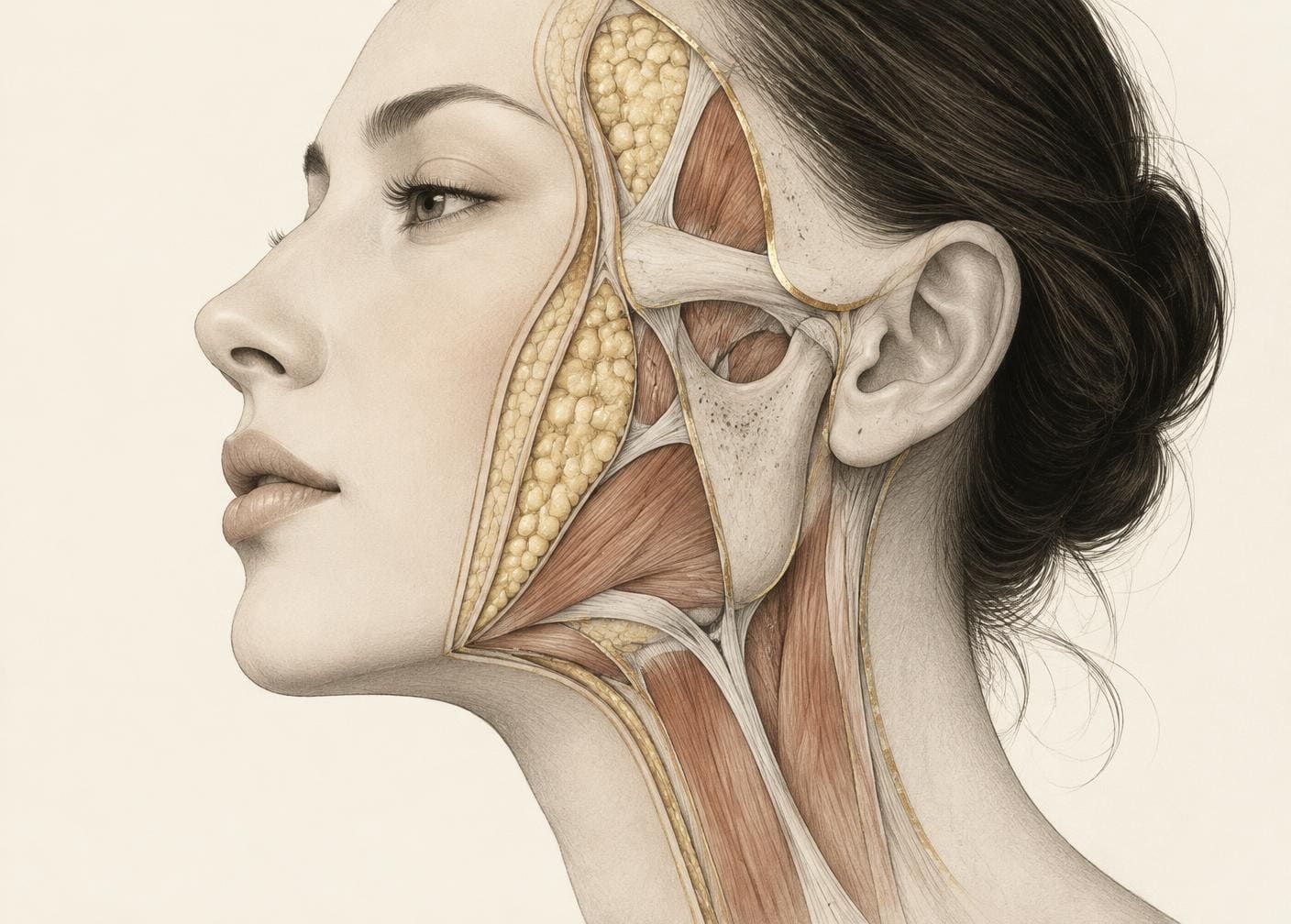
See beneath the skin
Every millimetre is a different decision.
Skin → fat → muscle → ligament → bone. Procedural anatomy taught by the planes you actually meet during treatment.
20 YEARS OF MISTAKES.COMPRESSED.
YouTube can give you information for free.
What it cannot easily give you is twenty years of:
- treatments that worked
- treatments that disappointed
- difficult anatomy
- bad patient selection
- complications
- over-treatment
- under-treatment
- techniques that looked clever but added very little
- techniques worth keeping forever
At HSI, students are not simply paying for information. They are paying to avoid making every mistake themselves.

“You can learn aesthetic medicine through trial and error. We simply remove most of the error.”
Twenty years of mistakes. Ten days of teaching.
Confidence arrives rather early.
Every injector meets Mount Stupid. The question is how long you stay there.
Mount Stupid
Confidence arrives rather early.
Conscious incompetence
Now you realise how much there is to know.
Technical competence
Your hands become calmer.
Clinical judgement
You stop treating isolated lines and start reading faces.
Restraint
You know what to treat. You also know what to leave alone.
Expertise is not confidence. It is calibrated confidence.

Precision
Confidence should arrive through control, not enthusiasm.
Hand stabilisation, needle angle, depth judgement and tissue feedback — skills that come from supervised practice, not reading.
We don't teach points.We teach decisions.

SEE → UNDERSTAND → DECIDE → TREAT
SEE
What has actually changed?
- Skin
- Movement
- Volume
- Sagging
UNDERSTAND
Which anatomical layer is responsible?
- Skin
- Muscle
- Fat
- Ligament
- Bone
DECIDE
What is the smallest useful intervention?
- Product
- Dose
- Depth
- Vector
- Sequence
RESTRAIN
Does this patient need treatment at all?
Anatomical change does not automatically define the treatment target.
Inside the training room
Real faces. Real supervision. Real judgement.
Every mark on the face is explained before a needle is chosen. Hands are supervised, decisions are discussed, and restraint is practised as deliberately as technique.
Where are you now?
Not which course to buy — where you are in your development.
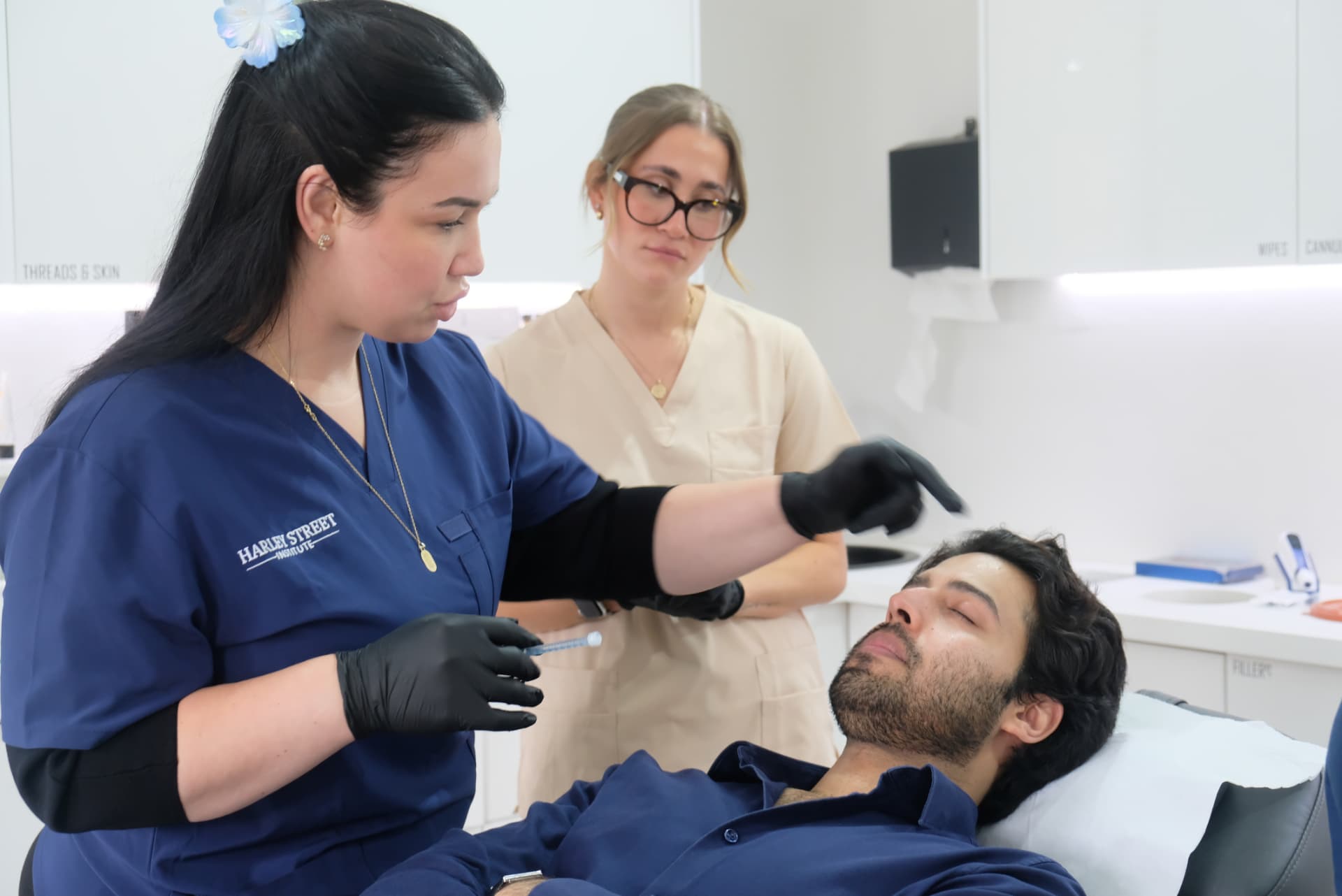
The final skill isn't knowing what to inject.It's knowing what not to.
Technical competence → Clinical judgement → Restraint.
STOP GUESSING.
The patient sitting in your chair does not need you to remember another injection diagram.
They need you to understand what you are seeing.
Know the anatomy. Know the options. Know the risks. Know when less is better.
And then put the needle exactly where you intended.
Harley Street InstituteTraining hands. Developing judgement.