
What is a Lesion?
Basic lesion recognition
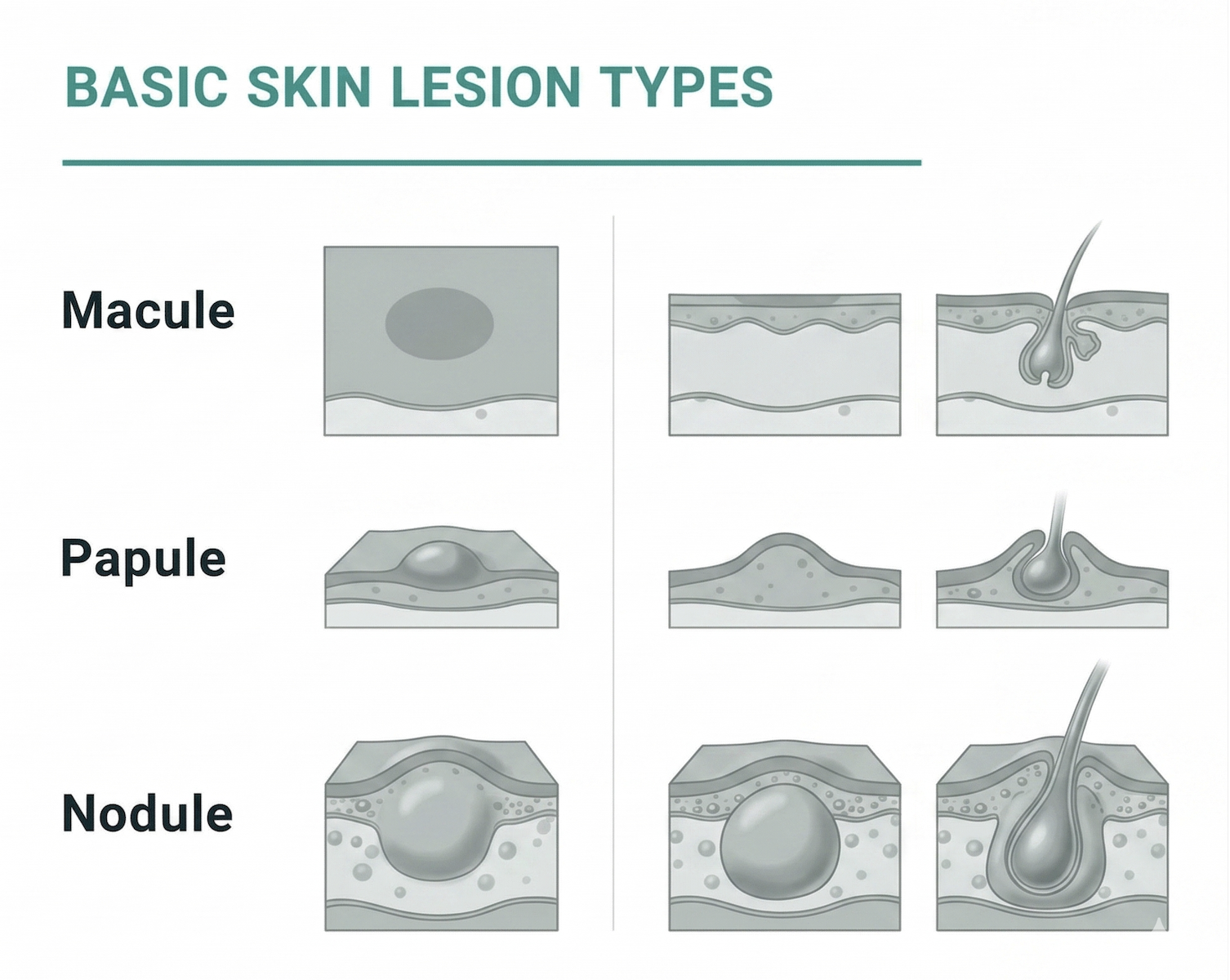
A lesion refers to any visible or palpable change in the skin. Understanding basic lesion types helps you describe what you are seeing and guides your clinical thinking.
Common lesion types include macules (flat areas of colour), papules (small raised bumps), and nodules (deeper, larger lesions). While you are not expected to diagnose complex dermatological conditions, recognising these basic categories allows you to communicate findings clearly.
Describing lesions accurately also helps identify patterns and differentiate between common conditions such as acne, rosacea, or benign growths.
This forms the foundation for more advanced dermatological assessment.
Clinical Takeaway
Accurate lesion description is the foundation for clinical communication and safe assessment.
Frequently Asked Questions
What is a skin lesion?
A lesion is any visible or palpable change in the skin, including macules (flat colour changes), papules (small raised bumps), and nodules (deeper, larger lumps).
Key Points
- Macule: flat area of colour change
- Papule: small raised bump
- Nodule: deeper, larger lesion
Continue Your Clinical Dermatology Training
This page is part of the CAD – Certificate in Aesthetic Dermatology by Harley Street Institute. Unlock the full structured programme to build clinical confidence in dermatological assessment.