
Documentation
Clinical records and medico-legal protection
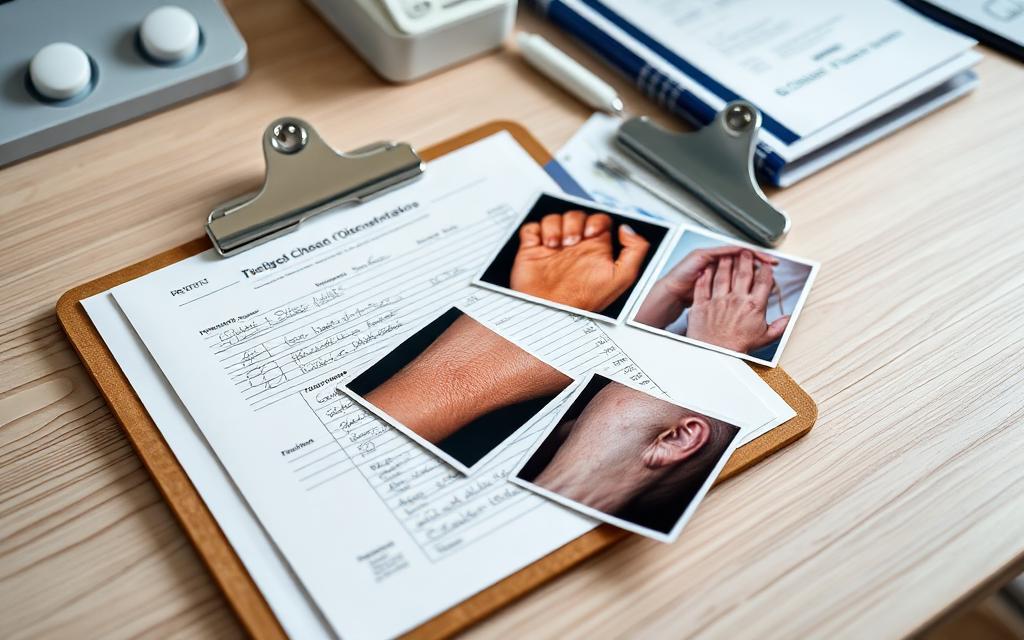
Accurate documentation is an essential part of clinical practice. It ensures continuity of care, supports treatment planning, and provides medico-legal protection.
Documentation should include a clear description of the lesion, its location, and any relevant changes over time. Clinical photographs, when appropriate, provide a valuable visual record and allow for comparison during follow-up.
Good documentation also demonstrates that a proper assessment was performed before treatment. This is particularly important in aesthetic practice, where outcomes and complications may be scrutinised.
Developing consistent documentation habits strengthens both your clinical practice and professional accountability.
Clinical Takeaway
Good documentation demonstrates that a proper assessment was performed. If it is not documented, it did not happen.
Key Points
- Document location, size, colour, and changes
- Clinical photographs enable comparison over time
- Documentation provides medico-legal protection
Continue Your Clinical Dermatology Training
This page is part of the CAD – Certificate in Aesthetic Dermatology by Harley Street Institute. Unlock the full structured programme to build clinical confidence in dermatological assessment.