Choosing Clients, Ethical Selling, and the Art of Assessment
When you're starting out in aesthetics, choosing the right clients can shape your entire journey. Younger patients — typically women between 25 and 40 — are ideal, especially when you're a young practitioner still mastering the fundamentals. Their treatments are more straightforward, the tissues are forgiving, and the anatomy is easier to read and respect. Results are predictable, feedback is encouraging, and confidence grows naturally. They also tend to need less product and appreciate subtle, balanced improvements. With targeted marketing — think Instagram, local wellness studios, and professional communities — this demographic becomes your core clientele: relatable, loyal, and perfectly in tune with your developing aesthetic style.
"What They Don't Teach You in a Master's Degree."
Real aesthetic insight starts where academic training ends.
Before any treatment, always examine the face thoroughly. A good injector is first a good assessor. Develop an eye that moves from the skin to structure, not just from problem to product. For this, we use the HSI Mini Aesthetic Scale — a structured yet intuitive grading system that provides an overall aesthetic score from 0 to 9, guiding both diagnosis and treatment planning.
HSI Mini Aesthetic Scale
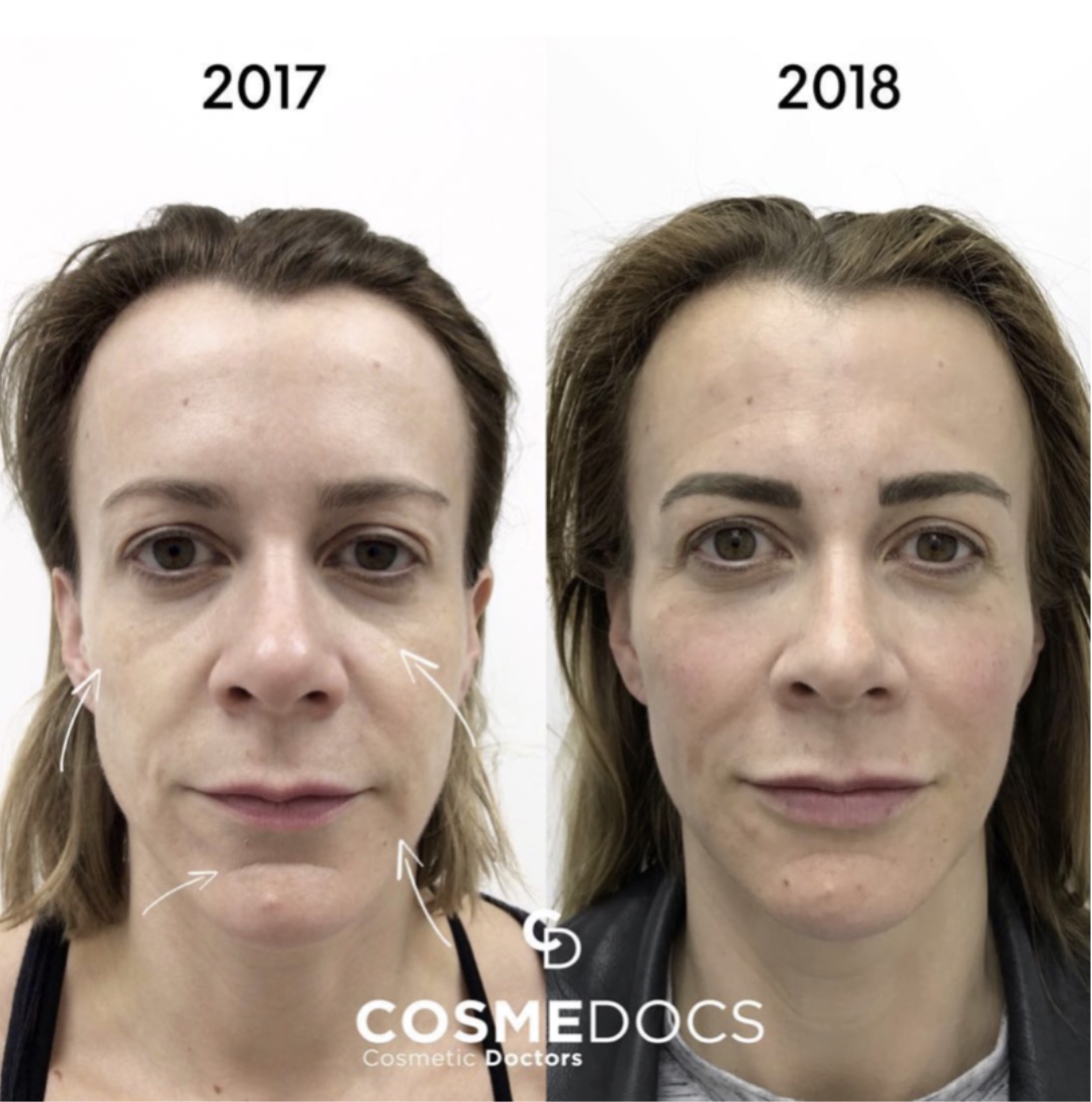
| HSI Mini Facial Scale Antiageing | |||||
|---|---|---|---|---|---|
| Before (Client has had previous upper face Botox) | After | ||||
| Skin Surface (0,1,2,3) | |||||
| Pores Size & Congestion | 1 | Pores Size & Congestion | 1 | ||
| Colour Changes | 1 | Colour Changes | 1 | ||
| Hydration | 1 | Hydration | 1 | ||
| Roughness | 1 | Roughness | 1 | ||
| Sensitivity | 0 | Sensitivity | 0 | ||
| Static Lines (0,1,2,3,4) | |||||
| Frown | 0 | Frown | 0 | ||
| Forehead | 0 | Forehead | 0 | ||
| Crows Feet | 0 | Crows Feet | 0 | ||
| DAO (Sad Expression Lines) | 0 | DAO (Sad Expression Lines) | 0 | ||
| Bunny Lines | 0 | Bunny Lines | 0 | ||
| Oral Commissure | 1 | Oral Commissure | 0 | ||
| Mentalis Crease | 3 | Mentalis Crease | 1 | ||
| Volume & Structure (0,1,2,3) | |||||
| Temples | 1 | Temples | 0 | ||
| Cheeks | 2 | Cheeks | 1 | ||
| Nasolabial | 2 | Nasolabial | 0 | ||
| Chin | 2 | Chin | 0 | ||
| Jawline | 3 | Jawline | 1 | ||
| Marionette | 2 | Marionette | 1 | ||
| Lips | 1 | Lips | 1 | ||
| Tear Trough | 1 | Tear Trough | 1 | ||
| Skin Laxity (0,1,2,3) | |||||
| Jawline Laxity | 1 | Jawline Laxity | 1 | ||
| Eyebrow Hooding | Eyebrow Hooding | ||||
| Total | 20 | Total | 11 | ||
Once each category is scored, the total gives an "Aesthetic Number" — a quick, objective summary of where your patient stands and a helpful visual guide to explain treatment priorities. For instance, a patient with strong dermal quality but mild volume loss might focus on fillers later, while one with poor skin texture benefits first from collagen stimulators or topical repair.
This approach turns your consultation into a science-backed discussion rather than a sales pitch. Patients appreciate seeing logic in your plan, not persuasion in your tone.
Restoring vs Contouring
Here's where most injectors either make magic — or a mess. Understanding the difference between restoring and contouring isn't optional; it's the fine line between natural elegance and the dreaded "filler face."
Restoring is straightforward: you're simply giving back what time, gravity, and collagen loss have quietly taken away. Think of it like dentistry — when there's a cavity, you fill it to restore what was lost, not to add extra tooth. The same applies to the face. You refill cheeks, lips, and lines to bring them back to their original harmony. You're not reinventing the patient — you're rewinding them.
Then comes contouring, which is where creativity begins. Here, you're adding more than what was originally there — building, enhancing, and sculpting. It's what we see in younger patients wanting more definition: sharper chins, fuller lips, higher cheeks. This is design, not repair. The tools are the same, but the intention is entirely different.
Now, here's the golden rule — most bad filler jobs happen when these two are confused. That mismatch between restoration and contouring is where aesthetic disasters are born.
Picture this: a middle-aged woman with 20-year-old lips but 50-year-old cheeks and jowls. The balance is gone. Or someone with a soft, sagging jawline but overfilled cheeks that don't actually "lift" anything — they just add bulk, casting strange shadows and creating that unmistakable filler look.
That's why I always start from the lower face — the jawline, chin, and peri-oral area — before moving upward. Once you restore the base, the rest of the face falls into proportion naturally. Jumping straight to the cheeks might be trendy, but it often throws the facial geometry completely off.
Of course, that's just my way — not a commandment. But I want you to appreciate the philosophy here. What I'm trying to show you isn't just technique; it's thinking in structure. You're not filling faces — you're restoring harmony and then, if appropriate, refining it with contour. Get that sequence wrong, and no amount of product or price tag will save the result.
"Remember — if you give a 50-year-old jawline a 20-year-old cheek, you don't reverse ageing… you just confuse the face."
— Dr. Haq
Ethical Selling
One of the most vital and misunderstood aspects of aesthetics is ethical selling. Selling ethically means prescribing responsibly, not pushing treatments. For example, if a client comes in for Botox to address fine lines, and you notice early photodamage or barrier dysfunction, it would actually be malpractice not to recommend topical correction such as retinol or SPF.
Guideline-based Hierarchy of Care:
- Do nothing if no treatment is indicated.
- Conservative & Preventative – start with skincare, topical retinoids, and protection.
- Minimally Invasive – neuromodulators, fillers, energy-based devices.
- Surgical or Structural – reserved for advanced cases.
This system keeps you grounded in ethics and ensures your patients trust you — because they'll see that your advice is measured, logical, and progressive, not opportunistic.
Mastering Steady Hands
No skill in aesthetics is as fundamental — yet as underestimated — as steady hands. A steady hand doesn't come from luck or natural talent; it comes from habit, muscle memory, and precise control of your micro-movements. Every injection, every cannula glide, every aspiration demands composure.
The key is to train your hands to stay calm while your mind stays sharp. This comes through repetition, ergonomics, and small rituals — like stabilising your elbows against your body, keeping wrists relaxed, and breathing consciously before injection. Think of it as developing neuromuscular intelligence — your brain and hand must speak the same language.
Watch Our Video Tutorial
To help you refine this, watch our dedicated video: "Mastering Steady Hands in Aesthetic Practice"
We'll also include a QR code in the printed version of this book, so you can scan it directly during your training or whilst practising. The video breaks down hand stability drills, needle control exercises, and posture adjustments — simple yet powerful techniques every injector should master before even picking up a syringe.
By combining the science of assessment, the ethics of practice, and the art of steady hands, you'll begin to bridge the gap between being a technician and becoming a true aesthetic artist.
How to Hold the Gauze
In aesthetic medicine, precision isn't just about where you inject — it's about how you handle everything around it. In this short tutorial, Dr. Ahmed Haq demonstrates the correct way to hold and position gauze during filler or toxin injections.
You'll learn how a simple adjustment in your hand positioning can:
- Improve visibility and control during treatment
- Minimise product wastage and bruising
- Maintain patient comfort and a clean injection field
These subtle techniques distinguish true aesthetic artists from beginners.
"Master the small details that make every injection look effortless."