
Skin as a Functional Organ
Beyond surface-level treatment
The skin performs several essential functions that are directly relevant to aesthetic practice. Its primary role is to act as a protective barrier against environmental damage, including UV radiation, pathogens, and irritants.
It also regulates water loss, maintains hydration, and plays a key role in immune response. When the skin is healthy, these functions are balanced and stable. However, when the skin is damaged or overstimulated, these systems become disrupted.
For example, excessive treatments can weaken the barrier, leading to increased sensitivity and inflammation. Similarly, disruption of the immune function can trigger conditions such as dermatitis or rosacea.
Understanding the skin as a functional system allows you to move beyond surface-level treatment and consider the deeper biological impact of your interventions.
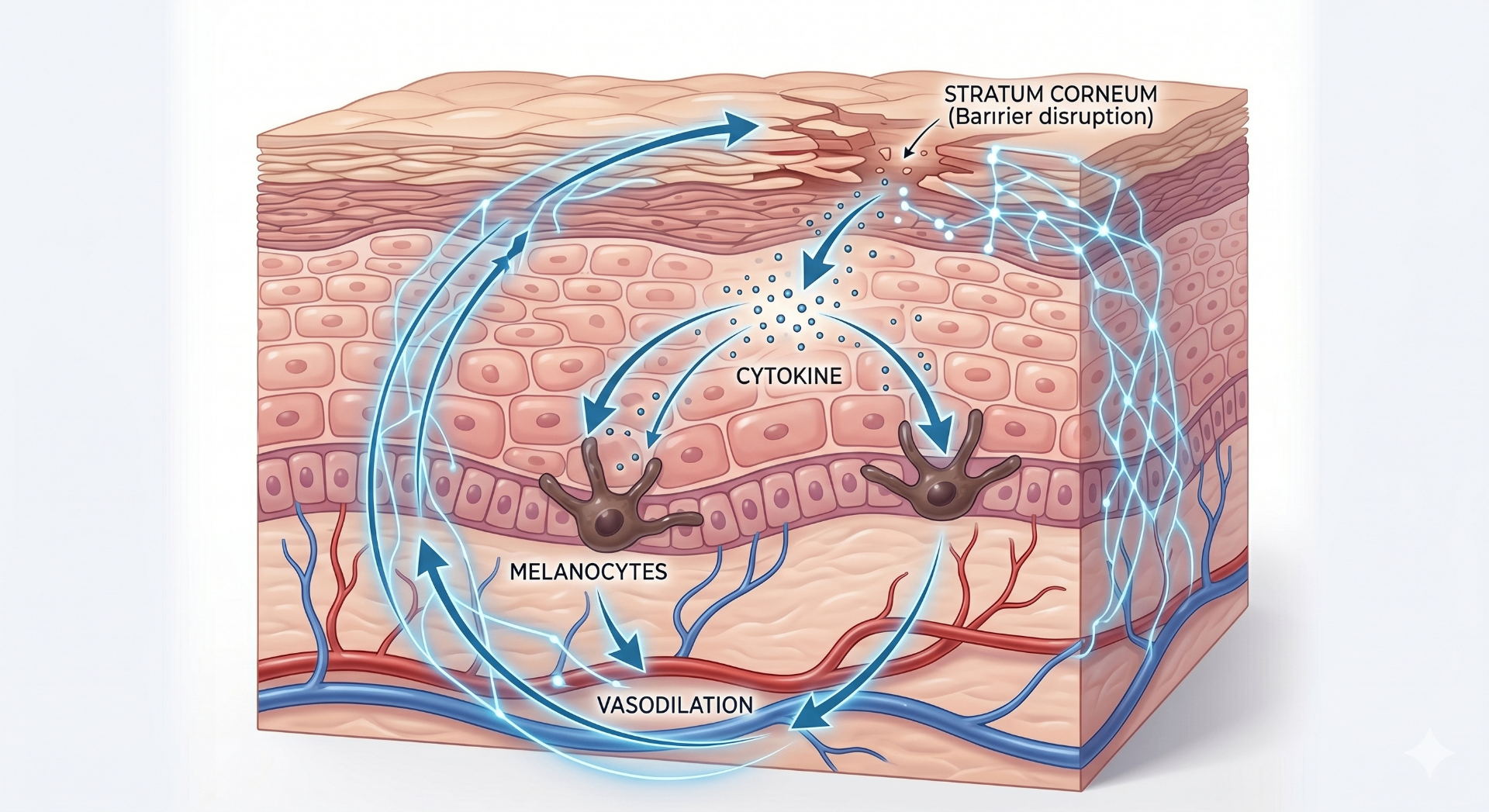
Here, we visualise the interdependence of the four core systems: Barrier, Inflammation, Melanocytes, and Vascular responses. Causal arrows track how a broken stratum corneum (barrier disruption) releases cytokines to activate a neighbouring melanocyte and dilate dermal capillaries, forming a continuous network. This is the biology you must respect before selecting any treatment.
Clinical Takeaway
Understanding the skin as a functional system allows you to move beyond surface-level treatment and consider the deeper biological impact of your interventions.
Frequently Asked Questions
What functions does the skin perform?
The skin acts as a protective barrier, regulates water loss, maintains hydration, and plays a key role in immune response. All of these functions are directly relevant to aesthetic practice.
Can aesthetic treatments trigger rosacea?
Yes — excessive or aggressive treatments can disrupt the skin's immune function, potentially triggering or worsening conditions such as dermatitis or rosacea.
Key Points
- The skin acts as a protective barrier against UV, pathogens, and irritants
- It regulates water loss and maintains hydration
- Excessive treatments can disrupt immune function and trigger conditions like rosacea
Continue Your Clinical Dermatology Training
This page is part of the CAD – Certificate in Aesthetic Dermatology by Harley Street Institute. Unlock the full structured programme to build clinical confidence in dermatological assessment.