Understanding Dysbiosis
What it is, what drives it, and what it does next
Page 1 of 520% through lesson
Lesson 2.2 · Page 1
Start here
Learning objective: Define dysbiosis, identify its major common causes, and explain its downstream effects on inflammation and barrier function.
Before we begin
“A client says: “I've never taken antibiotics in my life, so my gut can't be the problem.” Is that reasoning sound?”
What else could be driving dysbiosis in someone who's never had antibiotics?
Watch alongside this lesson
You Are Your Microbes
TED-Ed
Jessica Green and Karen Guillemin explain how each person's unique microbial community works — and how diet shapes which microbes thrive.
Supporting video selected for this topicOpen on YouTube
Key Points
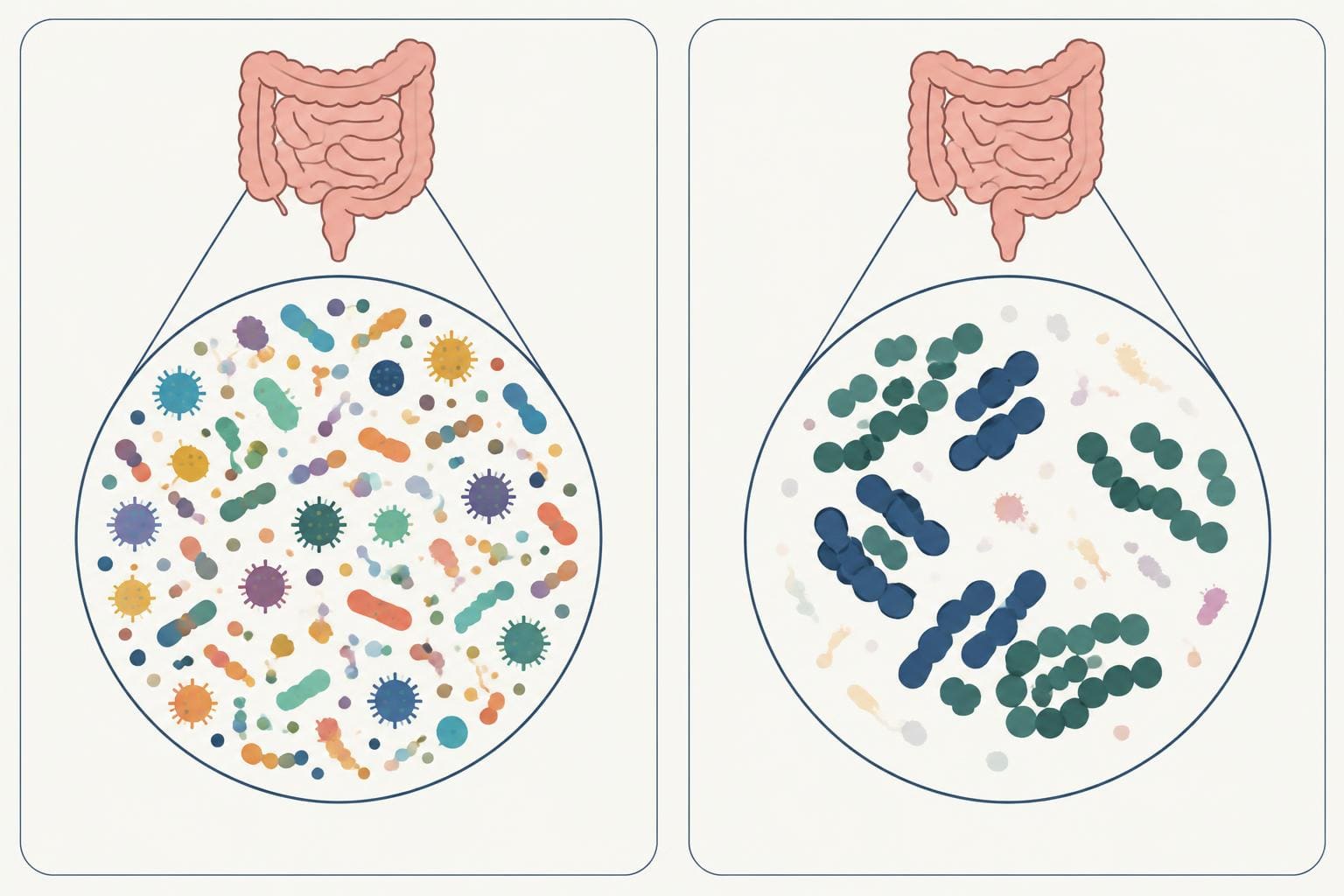
- Dysbiosis is an imbalance in the composition, diversity, or function of the gut microbiome — an umbrella term, not a single condition.
- Major causes include antibiotics, chronic stress, low-fibre processed diets, environmental toxins, infections or overgrowths, common medications, and ageing itself.
- Dietary fibre is fermented into SCFAs (butyrate, acetate, propionate) that fuel colon cells and support barrier integrity.
- SIBO shows dysbiosis is often about location, not species — normal bacteria overgrowing in the wrong part of the tract.
- Downstream effects: increased permeability, low-grade systemic inflammation, altered SCFA production, disrupted gut–brain signalling.