The Gut-Everything Axis
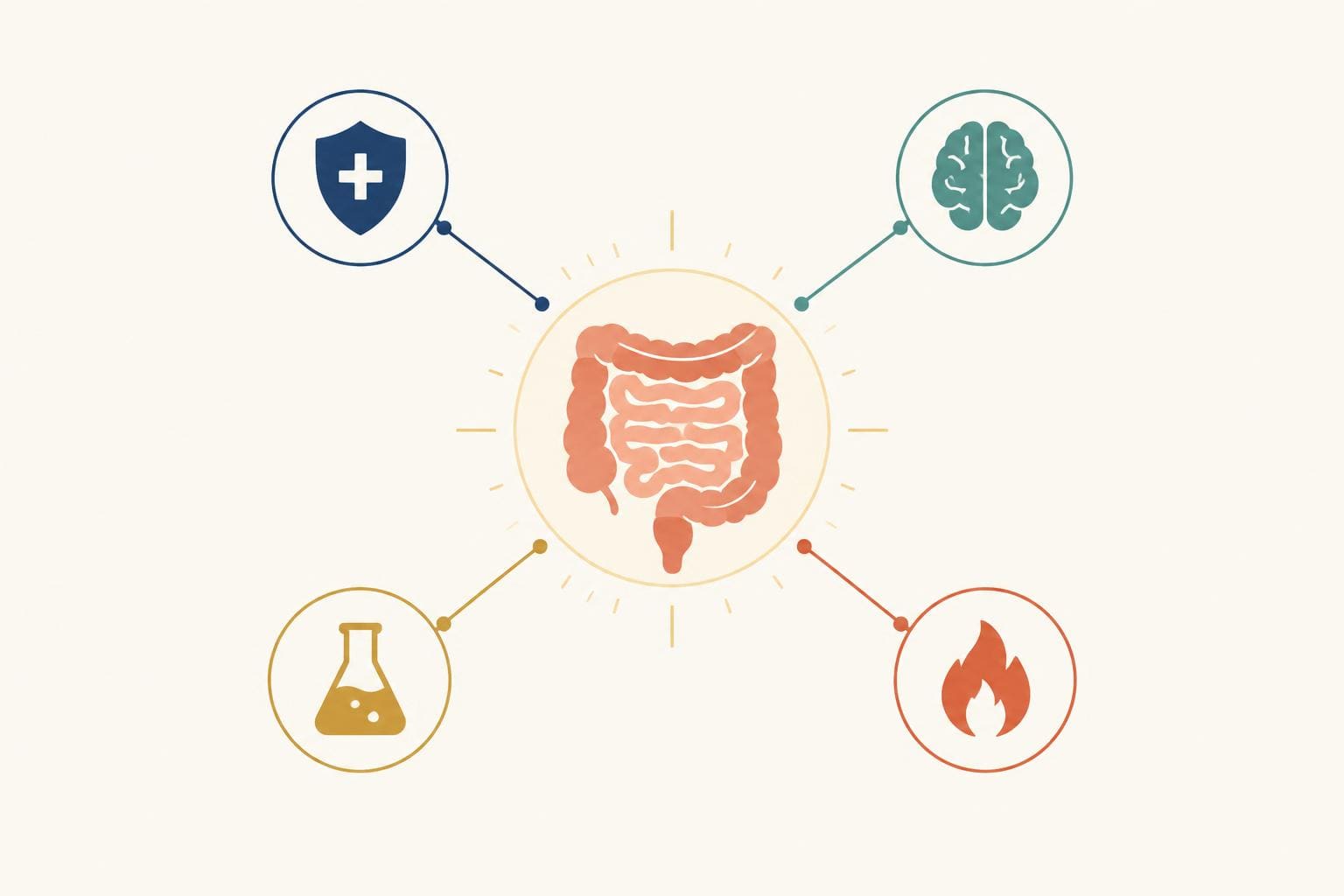
Why the gut is a hub, not a side-topic
Page 1 of 520% through lesson
Lesson 2.1 · Page 1
Start here
Learning objective: Explain why the gut is considered a central hub of systemic health rather than an isolated digestive organ, and describe at least two mechanisms connecting gut health to conditions outside the digestive tract.
Before we begin
“A client is being treated by a dermatologist for their skin, a GP for “IBS”, and is privately managing anxiety alone — three specialists, zero conversations between them. What might they all be missing?”
Before you learn anything — what's your honest first response to this client?
Watch alongside this lesson
2-Minute Neuroscience: Gut-Brain Axis
Neuroscientifically Challenged
A concise overview of the bidirectional gut–brain axis: vagus nerve signalling, immune signalling and microbial metabolites.
Supporting video selected for this topicOpen on YouTube
Key Points
- The gut is a central regulatory hub — digestion, immunity, inflammation, hormone metabolism, mood and cognition all route through it.
- GALT makes up roughly 70% of the immune system by weight — gut health and immune function are structurally inseparable.
- Enterochromaffin cells in the gut lining produce approximately 90–95% of the body’s serotonin.
- When the gut barrier is compromised — “leaky gut”, more precisely increased intestinal permeability — systemic immune and inflammatory responses can follow far from the gut.
- Dysbiosis and chronic inflammation are both Hallmarks of Aging: the gut is core longevity content, not a side-topic.