The Deep (Reticular) Dermis
The Foundation Layer
Where Strength Lives, Wrinkles Dig In, and Real Repair Begins
Once you pass the papillary dermis, you enter the reticular dermis — the layer with the thick collagen cables, the resilient elastin fibres, and the deeper vascular network. This is the layer that gives the skin its strength and its ability to resist folding.
When the reticular dermis is intact, the skin holds shape.
When it weakens, everything above it starts collapsing in slow motion.
Here live the lines that stay even at rest:
- Deep crow's feet
- Cheek folds
- Forehead grooving
- Lower-face laxity
This layer ages not because the patient smiled too much, but because the fibroblasts got bored, MMPs got excited, and collagen cross-linking stopped playing nicely.
The reticular dermis doesn't whisper its decline.
It announces it.
Deep Dermal Micro-Filler — Structural Stitching
This is your most elegant tool for repairing real dermal architecture.
In this plane, filler isn't "filler."
It's reinforcement.
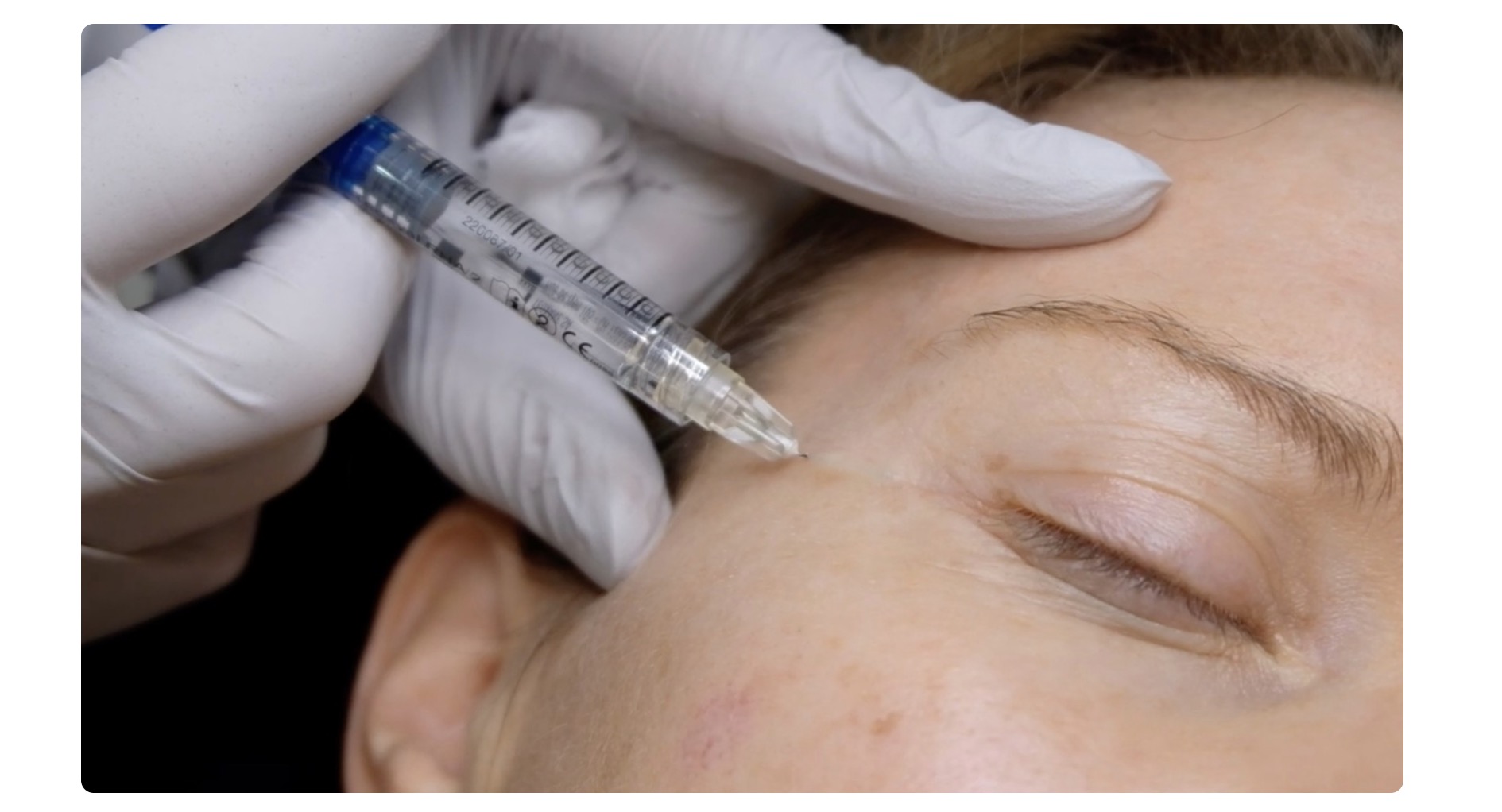
You insert tiny micro-boluses — less than 0.01 ml — with a steady hand and a 30G or 32G needle. The syringe barely moves a notch; you almost feel like you haven't injected anything at all. But the skin tells you the truth: a soft, subtle plump, a tiny bleb — like a Botox bleb around the crow's feet, but even smaller and more disciplined.
You're not adding volume.
You're stitching the collagen bed, reinforcing the dermal fabric so the skin can finally lie smooth again.
Two cues every injector must know:
• If you can see the silver of your needle, you're in the dermis.
• If it disappears, you're exploring uninvited neighbourhoods.
Technique — The Layer That Rewards Respect
Entering at too steep an angle (45°) makes you fall deeper before you realise.
Parallel entry is safer.
Bending the needle (20–30°) improves control.
Landing the syringe softly — like a plane — lets you glide into the reticular layer without unintentional depth.
The dermis talks if you watch it carefully —
icy-blue = too superficial, silver shimmer = perfect plane, disappearing needle = too deep.
This layer is one of the safest, as long as your eyes stay on the metal.
Here is the rule that makes the dermis simple: any visible static line — one that sits there at rest, not just on animation — is almost always a dermal problem. Not muscle. Not deep volume. The line lives in the skin, so the correction lives in the skin.
The technique you learned on your foundation filler course — the same slow, threaded, superficial pass you were taught for lips and perioral lines — works everywhere on the face. Forehead lines, glabellar etch, crow's feet residue, cheek crepe, neck lines, even the fine vertical lip lines. Same plane, same hand, same discipline. The anatomy changes name; the skill does not.
How to inject the dermis: enter at a shallow angle, almost parallel to the skin. You should see the silhouette of the needle through the surface — that silver shimmer is your confirmation you are in the right plane. Inject tiny aliquots, low pressure, with the bevel up. Withdraw as you deposit. If the skin blanches white instantly and the line lifts, you are correct. If you see a blue tint, you are too superficial. If the needle disappears, you have dropped through into subcutaneous and you are wasting product on a dermal problem.
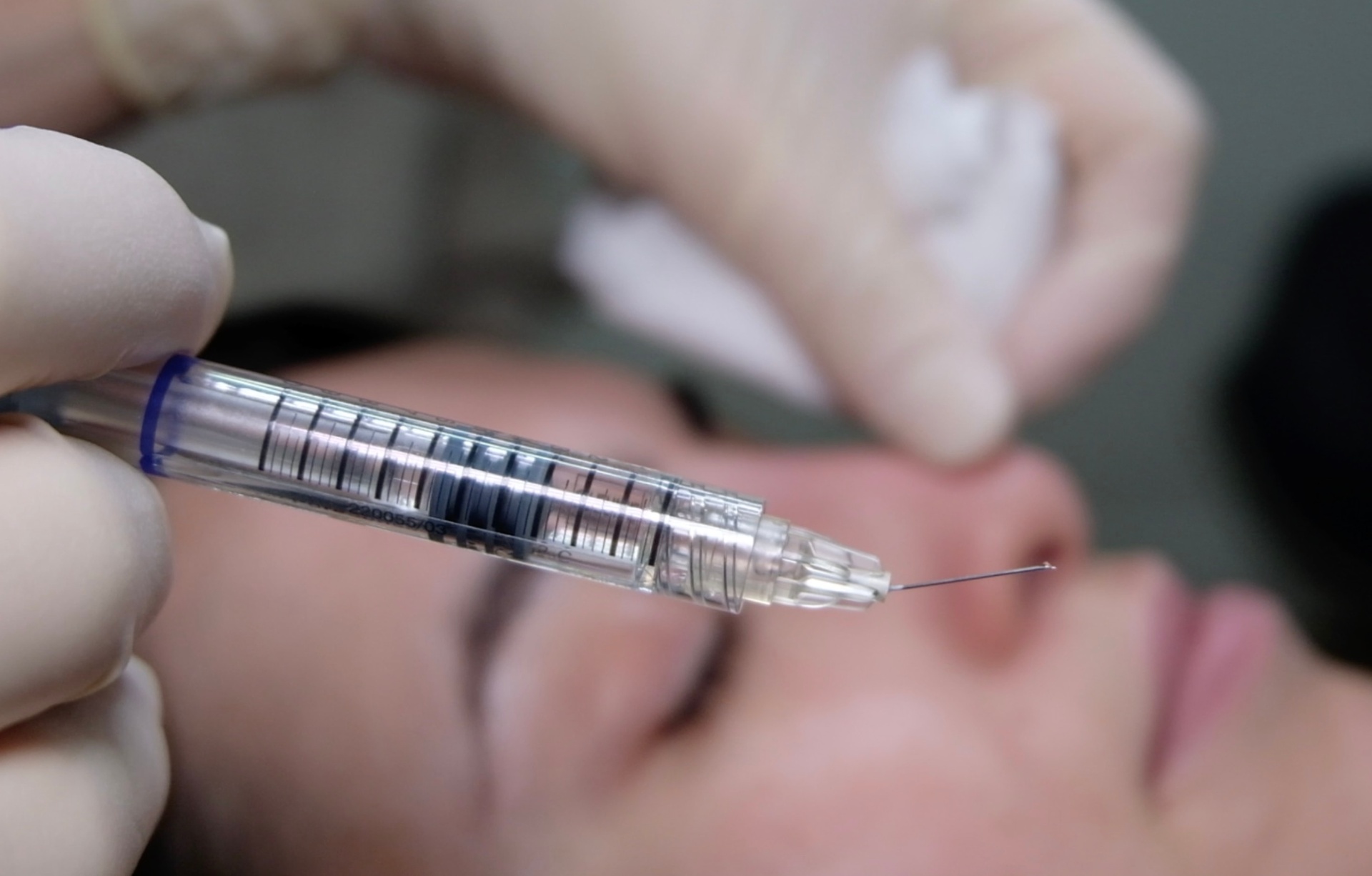
Bending the needle
Why bend the needle? In areas like the nasolabial fold, a straight needle forces your wrist into a weak, awkward angle — you lose fine control exactly where you need it most. A gentle 20–30° bend lets your wrist stay neutral and strong, so the hand that delivers the product is the same hand that can stop on a millimetre. Better ergonomics, better precision, safer plane.
Dermal fillers can be used in the dermis anywhere on the face.
When you enter at 45 degrees, you need to be extremely careful with your depth. In the periorbital area, going a touch deeper is actually safer than staying too superficial.
Why?
Because the skin here is so thin that a superficial pass risks visible product, Tyndall, and those little bluish ridges that betray your work faster than any complication. A hair deeper sits you in a smoother, more forgiving plane.
Retinoids in the Reticular Layer — The Long Game
The fibroblasts here have retinoic acid receptors too.
Retinoids in this layer:
- Increase Type I collagen
- Improve elastin cross-linking
- Boost HA and ground substance
- Reverse UV-induced disorganisation
- Reduce MMP-driven collagen destruction
This is why patients on retinoids long-term simply age slower.
Retinoids are not skincare.
They are dermal medicine.
PNs in the Reticular Dermis — Slow, Steady, Structural
Polynucleotides are excellent here for:
- Sun-damaged lower cheeks
- Under-eye structural thinning
- Lower-face tethering
- "Crepe but not hollow" skin
They don't shape.
They strengthen.
Botox + Reticular Dermis — The Perfect Pair
Botox prevents future fractures.
Micro-filler repairs the fractures already carved into the dermis.
Together they create durable improvement — the kind that lasts through expression and time.
Botox and micro-filler working together for durable dermal repair.
Why the Reticular Dermis Matters
Because this is the foundation.
The papillary dermis gives radiance.
The reticular dermis gives resilience.
When both layers are restored, patients don't just look better —
they age slower, more gracefully, and more naturally.
When Fillers Scare Them — Alternatives That Work
Some patients hear "filler" and think Courtney Cox, 2015. Don't fight them — educate them.
"If the word 'filler' scares them, whisper 'collagen stimulator.' Same goal, less drama."
If they're not ready for filler, there are two great alternatives for dermal stimulation:
Microneedling – creates micro-injuries that wake fibroblasts the same way exercise wakes your muscles.
Polynucleotides (PNs) – the "biostimulators" that improve dermal density and elasticity without adding volume.
Both are slower and subtler but deliver consistent improvement — especially in thin, crepey skin.
The Dermal Strategy — In Summary
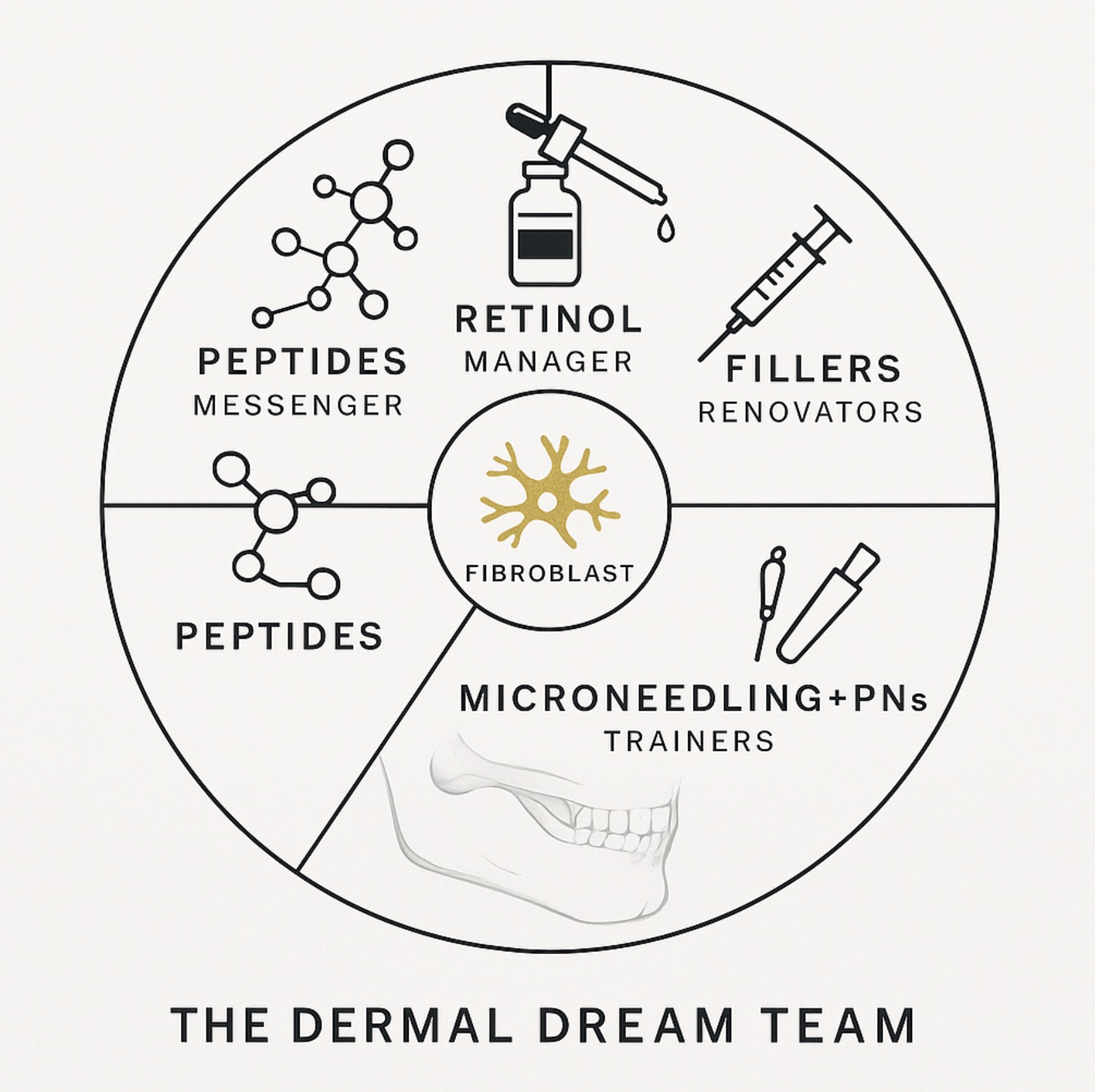
Fibroblast = The factory.
Retinol = The manager.
Peptides = The messenger.
Fillers = The renovation team.
Microneedling & PNs = The gym trainers.
You need all of them working together — because great skin isn't built by one ingredient; it's orchestrated like a team.
So, now we arrive at the subcutaneous layer — the part where things finally start to get exciting from an injectable point of view.
That's not to say the epidermis and dermis weren't important. In fact, they're vital — just painfully underrated. That's why I began the book with them. They're the low-hanging fruit of aesthetic medicine that so many practitioners overlook.
Simple treatments like peels, microneedling, and cosmeceutical regimens don't just transform skin quality; they build your practice. These are the quiet heroes that pay your clinic's electricity bills, rent, and staff salaries. The injectable work? That's your profit margin. Once you get your head around that, you start thinking like a sustainable injector, not a desperate one.