Slide 1: Botox for Chronic Migraine — PREEMPT Protocol — HSI Online CPD | Harley Street Institute
Botox for Chronic Migraine
Why this protocol exists, and what it does not treat
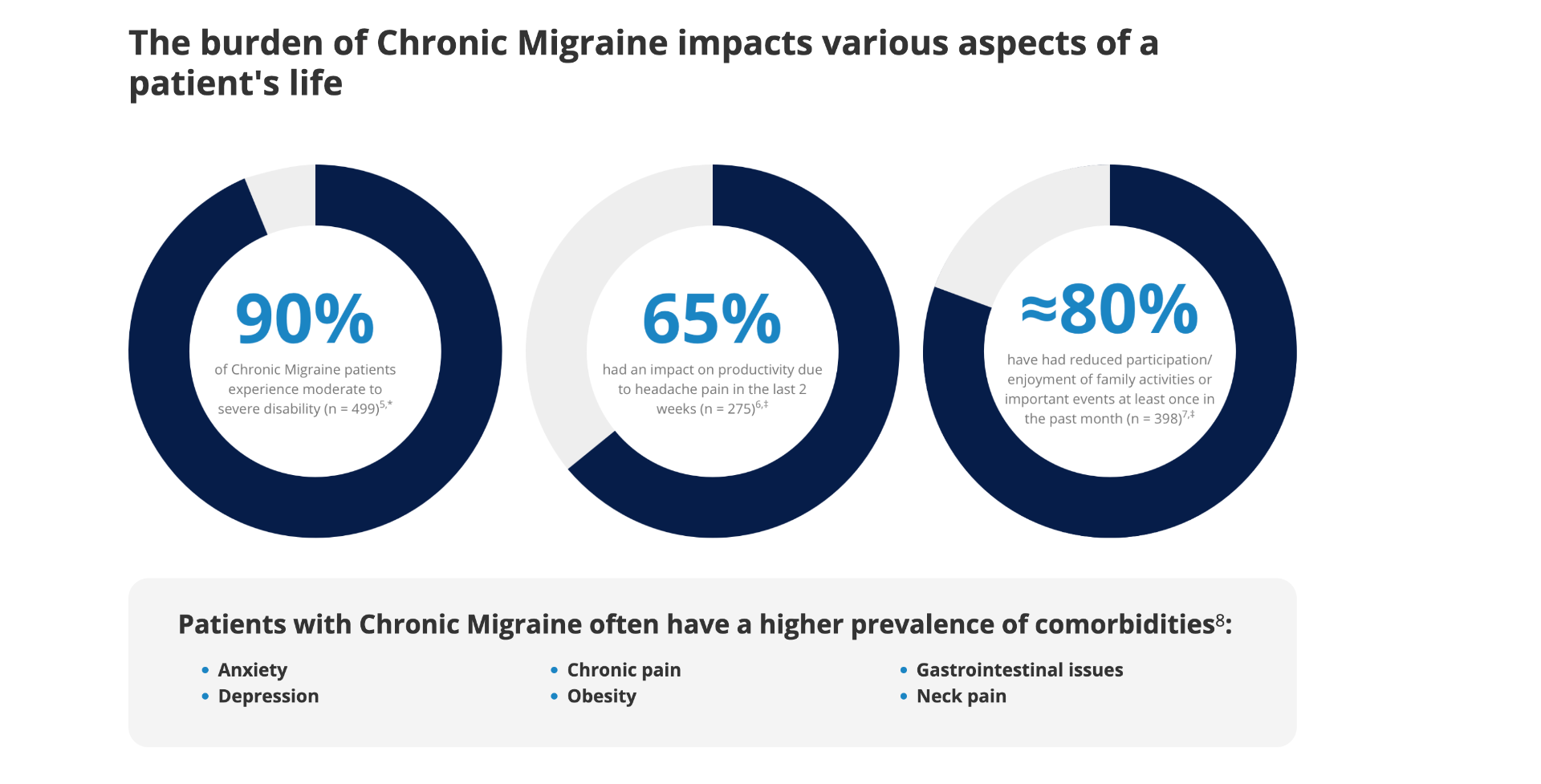
Chronic migraine is one of the most disabling neurological conditions in clinical practice, and onabotulinumtoxinA (BOTOX) is one of only a handful of prophylactic options with both regulatory approval and high-quality randomised evidence.
This course covers the PREEMPT protocol — the fixed-site, fixed-dose injection paradigm developed through the pivotal phase 3 PREEMPT 1 and PREEMPT 2 trials — and the licensing, NICE guidance and trial landscape that have made it the de facto standard of care across the NHS and most European headache services.
Crucially, BOTOX is licensed for chronic migraine, defined by ICHD-3 as headache on ≥15 days/month for >3 months, with ≥8 days/month having migraine features. Outside this population — particularly in episodic migraine — the evidence base does not support the same treatment, and modern phase 3 trials (most notably PRECLUDE) have been negative.
Before any injection is planned, the first clinical decision is whether the patient meets criteria for chronic migraine. That single question shapes everything that follows.
Key Points
- Licensed for chronic migraine only — not episodic migraine
- PREEMPT is the only protocol with proven efficacy in chronic migraine
- ICHD-3 criteria define the eligible population
- NICE TA260 anchors NHS commissioning to the same paradigm
Clinical Tip
If you cannot confidently document ≥15 headache days/month with ≥8 migraine days, the patient does not meet the licensed indication — regardless of how severe their symptoms feel.