Objectives
- Understand the gut as a regulatory interface for systemic signalling
- Recognise early gastrointestinal signals of ageing and regulatory drift
- Interpret medication exposure as a regulatory modifier
- Apply gut-brain and microbiome insights to clinical practice
Pre-requisites
Completion of the Certificate in Anti-Ageing & Longevity Medicine or equivalent foundational training in longevity medicine principles.
Learners should have a working understanding of biological ageing mechanisms and systems-based clinical thinking.
Who Is It For
This module is designed for healthcare professionals seeking to expand their understanding of ageing medicine:
Development Outcomes
Course Aims & Objectives:
- Maintenance and development of knowledge and skill within your field of practice
- Expand assessment options for patients with gastrointestinal ageing patterns
- Integrate polypharmacy review and gut signalling into existing clinical frameworks
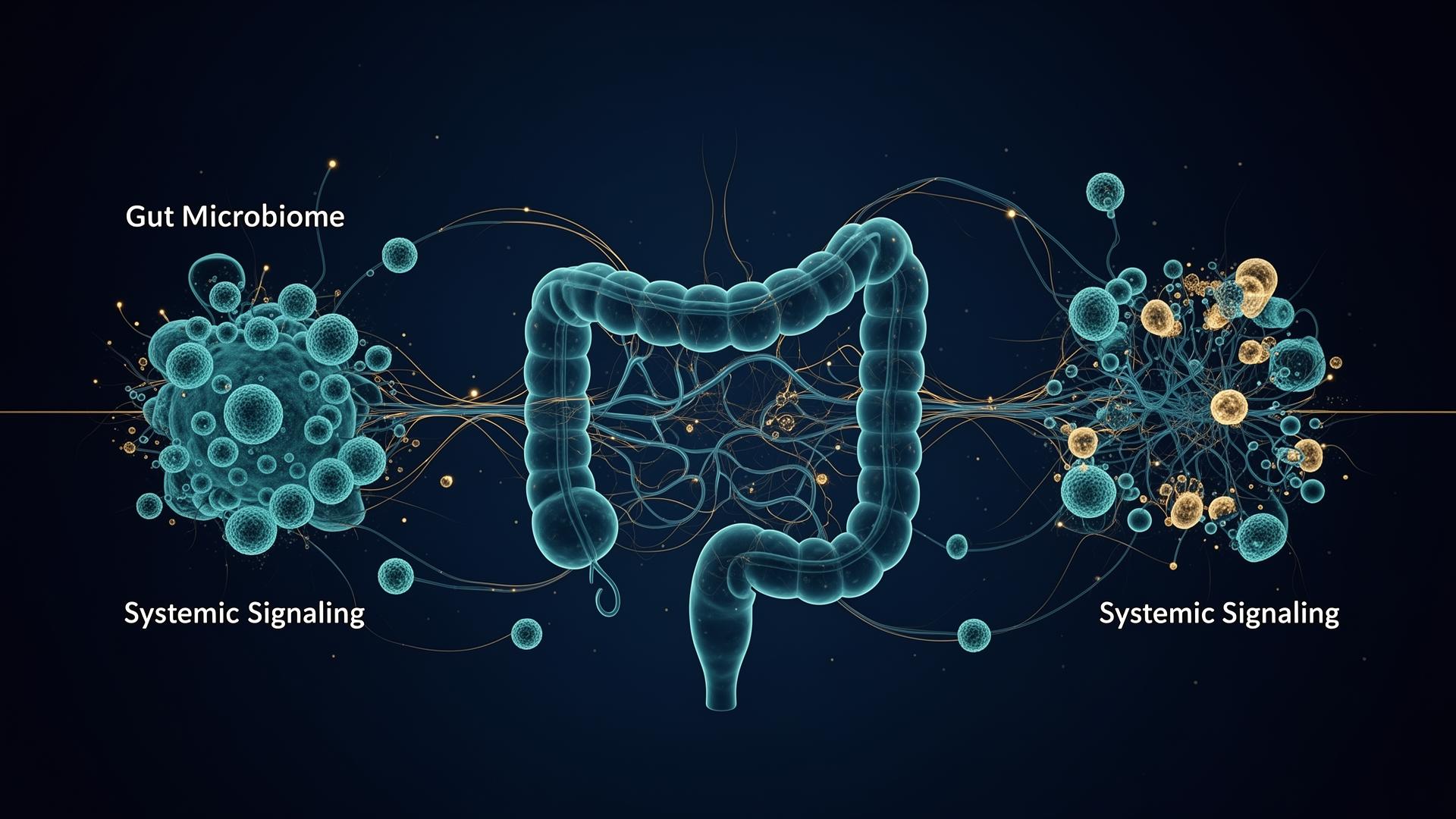
The gastrointestinal system plays a central role in systemic signalling, influencing metabolism, immune balance, neurocognitive function, and inflammatory tone. With age, changes in gut physiology and long-term medication exposure can subtly reshape these signals, contributing to accelerated loss of resilience.
In systems-based anti-ageing medicine, the gut is not treated as an isolated digestive organ, but as a regulatory interface between environment, immunity, metabolism, and ageing biology.
1. The Gut as a Regulatory System
The gut contributes to systemic regulation through:
- Gastric acid production and barrier function
- Nutrient sensing and absorption
- Microbiome composition and metabolic signalling
- Interaction with immune and inflammatory pathways
- Bidirectional gut–brain communication
Together, these mechanisms influence energy availability, immune tone, and long-term physiological stability.
2. How Gut Regulation Changes With Age
With ageing:
- Gastric acid production may decline
- Barrier integrity weakens
- Microbiome diversity and composition shift
- Immune signalling from the gut becomes more pro-inflammatory
- Sensitivity to dietary and medication effects increases
These changes often occur gradually and may remain clinically silent for extended periods.
3. Early Clinical Signals of Gut-Related Regulatory Drift
Early signals seen in practice may include:
- Gastrointestinal discomfort or altered bowel patterns
- Fatigue or reduced energy
- Increased infection susceptibility
- Nutrient-related signalling changes
- Heightened inflammatory sensitivity
These signals frequently coexist with stress, metabolic, or immune strain.
4. Medication Exposure as a Regulatory Modifier
A key concept in this topic is the role of long-term medication exposure as a modifier of systemic signalling.
Learners explore:
- How medications alter physiological environments
- Why trade-offs exist between symptom control and downstream effects
- How chronic exposure may influence microbiome balance, nutrient signalling, and immune tone
This discussion emphasises interpretation of trade-offs, not criticism of medications.
5. Phenotype Connections
Gut-related regulatory changes commonly interact with:
These overlaps illustrate how gut signalling contributes to system-wide ageing trajectories.
6. Systems Interpretation (Not Treatment)
Learners are trained to interpret gut-related signals by asking:
- →Is this a local digestive issue or a systemic regulatory signal?
- →Are multiple systems affected simultaneously?
- →Is resilience narrowing in response to environmental or pharmacological inputs?
The emphasis remains on pattern recognition, not intervention.
7. Boundaries & Professional Scope
This topic does not teach:
- ✕Dietary plans or elimination protocols
- ✕Supplement regimens
- ✕Medication withdrawal or substitution strategies
- ✕Microbiome manipulation techniques
It focuses on understanding gut-related ageing mechanisms, not treating them.
How This Topic Fits Within the Diploma
Gut, medication, and systemic signalling act as a modulatory layer, influencing:
Understanding this system helps clinicians interpret complex, multi-system presentations with greater clarity.